Industrial Retrofitting with LoRaWAN: Connecting Legacy Equipment
Why Retrofit Instead of Replace
Industrial equipment lasts decades. Water meters installed in the 1990s still measure accurately. Factory machines commissioned fifteen years ago still produce parts within spec. The equipment works; it just doesn't talk to anything.
Replacing functional machinery to gain connectivity makes no financial sense. A €200k CNC machine doesn't need replacing because it lacks a network interface. A working water meter doesn't need swapping because the utility wants remote readings. The economics are straightforward: add connectivity to what exists rather than rip out and replace.
This is where LoRaWAN retrofitting creates real value. The complexity of bridging old industrial protocols to modern IoT networks requires expertise: custom firmware, protocol knowledge, field experience with legacy equipment. It's not plug-and-play, which is exactly why it's worth doing.
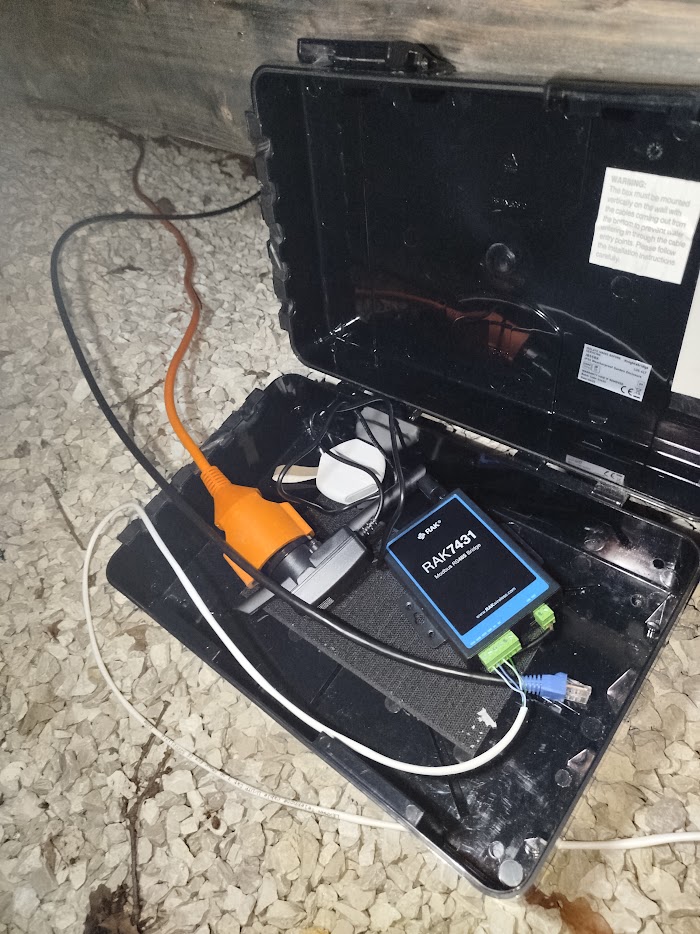
Replacing a 20-year-old flow meter? $15,000 + 2 days of downtime. Retrofitting it with a LoRaWAN bridge? $400 + 15 minutes. Stop burning CAPEX on hardware that isn't broken.
What Gets Retrofitted
Legacy Metering Infrastructure
Water meters, gas meters, and electricity meters installed over the past 30 years typically output pulse signals: one pulse per unit of consumption. These pulse outputs were designed for local data loggers or building management systems connected by cable.
A LoRaWAN pulse counter attaches to the existing meter output. No meter replacement, no recalibration, no disruption to billing. The meter keeps doing what it always did; now the readings arrive wirelessly every 15 minutes instead of requiring someone to walk to each meter with a clipboard. The application side of this is covered in the water metering and electricity sub-metering articles.
Thousands of legacy meters can be connected to a single LoRaWAN network. One gateway covers an entire industrial estate or utility district. The cost per meter drops to a fraction of what a full meter replacement program would require.
Industrial Machines on Modbus and RS485
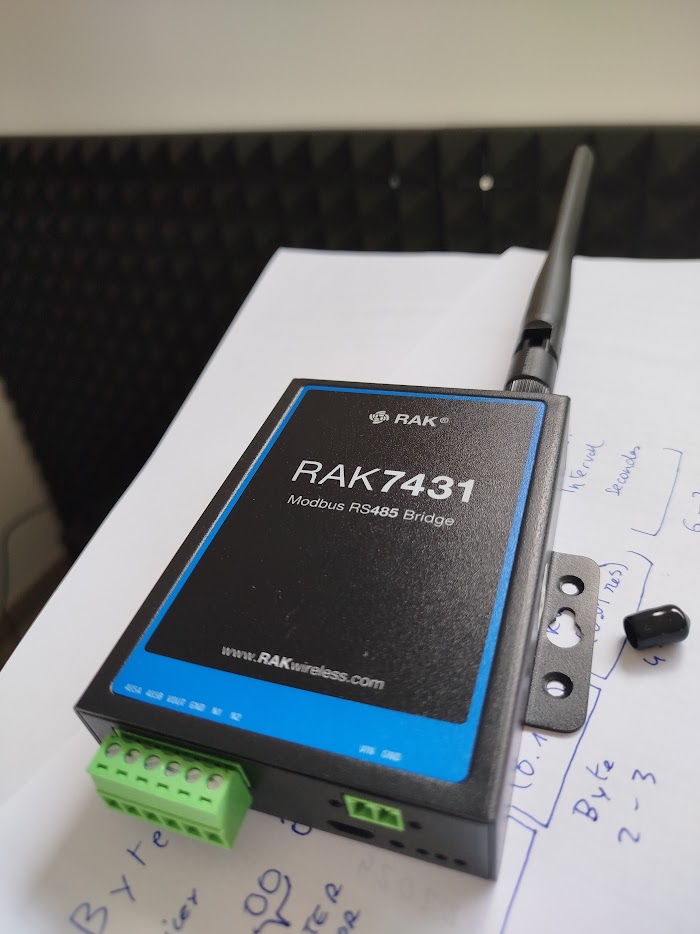
Factory floors run on Modbus. PLCs, variable frequency drives, compressors, chillers, boilers: most industrial equipment manufactured since the 1980s speaks Modbus RTU over RS485. The data is there: temperatures, pressures, motor speeds, fault codes, run hours. It's just locked behind serial cables that terminate at a local HMI or SCADA system.
A LoRaWAN-to-Modbus gateway reads registers from existing equipment and transmits the values wirelessly. No changes to the machine's control system. No PLC programming. No risk to production. The gateway is a passive reader; it queries registers on a schedule and reports upstream.
Compressors and HVAC give up discharge pressure, suction temperature, run hours and fault status, which together show efficiency degrading long before it turns into a breakdown. Pumps and motors report current draw, operating hours and, with an add-on sensor, vibration, so a failing bearing appears as a trend rather than as a phone call at 2 AM. Boilers and chillers expose supply and return temperatures, firing rates and efficiency figures that can finally be compared against what the design specification promised. And production counters yield piece counts, cycle times and reject rates, which is real OEE data extracted from machines built before anyone had coined the term.
The value isn't just remote monitoring; it's getting data off machines that were never designed to share it. Once that data reaches a network server, it feeds dashboards, alerts, and trend analysis that the original equipment manufacturer never envisioned.
Analog Signals: 4-20mA and 0-10V
Process instrumentation across water treatment plants, chemical facilities, and manufacturing lines uses 4-20mA current loops. These analog signals represent continuous measurements: flow rates, tank levels, pressures, temperatures. The signals run on dedicated copper pairs, often over hundreds of meters, terminating at chart recorders or aging DCS systems.
LoRaWAN analog input sensors tap into existing 4-20mA loops without interrupting them. A sensor clamps onto the loop, reads the current value, and transmits wirelessly. The existing control system continues operating exactly as before; the LoRaWAN sensor is an observer, not a participant.
This matters in regulated industries. Modifying control loops in a water treatment plant or chemical facility requires engineering review, safety analysis, and regulatory approval. Adding a wireless observer to an existing loop requires none of that.
Dry Contact and Digital Outputs
Older equipment communicates status through relay contacts: machine running, fault active, door open, level high. These dry contacts connect to annunciator panels, warning lights, or local alarm systems. Useful at the panel, invisible everywhere else.
LoRaWAN digital input sensors monitor these contacts and report state changes wirelessly. A compressor fault that previously lit up a panel light in the plant room now triggers an alert on an engineer's phone. A tank level switch that previously activated a local pump can simultaneously report to a central monitoring system.
The Custom Firmware Advantage
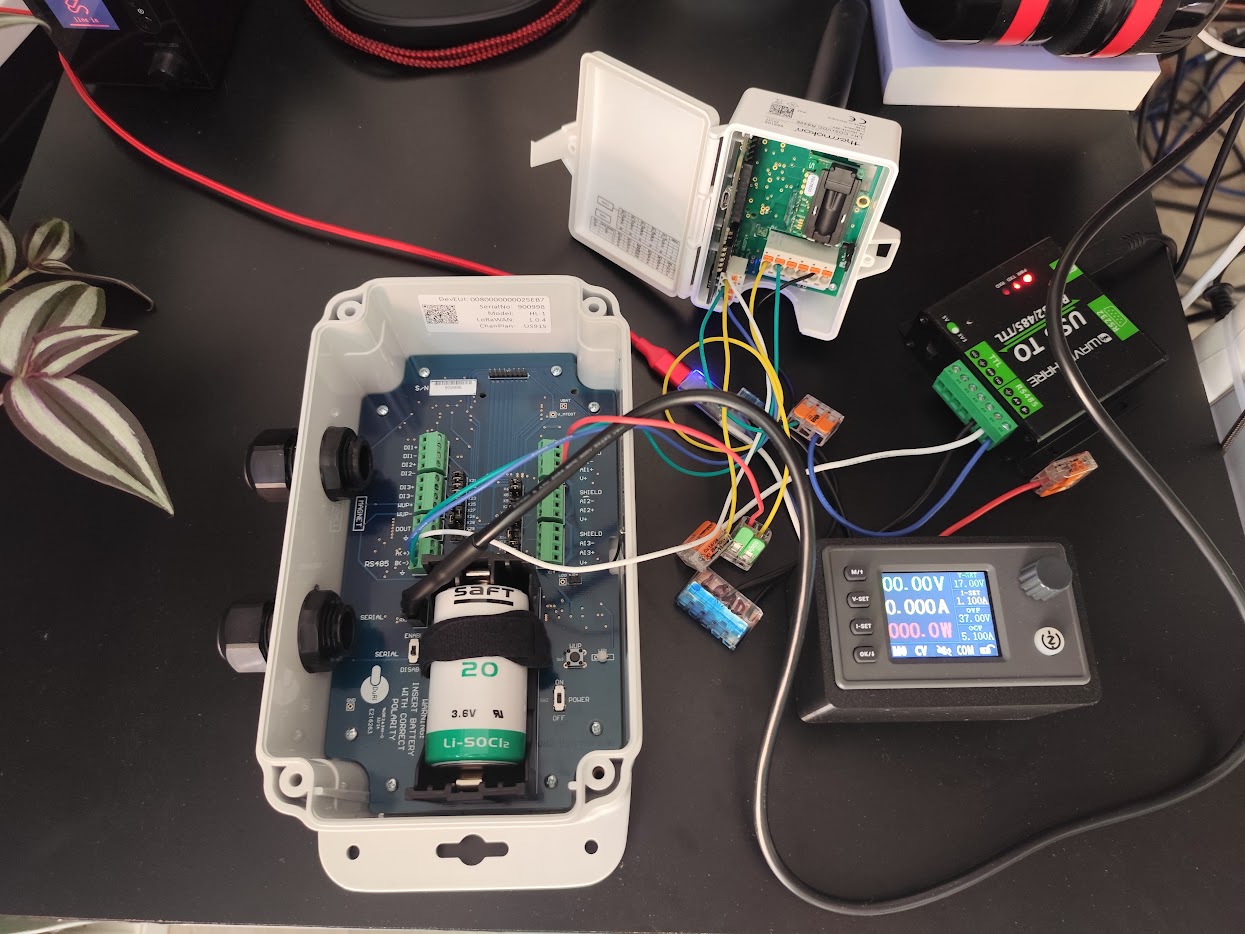
Off-the-shelf LoRaWAN sensors handle straightforward measurements: temperature, humidity, door contact. Industrial retrofitting rarely fits standard products. Every machine has different Modbus register maps. Every legacy meter has different pulse characteristics. Every installation has specific requirements for data formatting, transmission intervals, and alarm thresholds.
Custom firmware solves this. A purpose-built firmware image for a LoRaWAN-to-Modbus gateway reads the exact registers from your specific equipment, formats the data according to your network server's decoder expectations, and transmits on a schedule that balances battery life against monitoring requirements.
Custom firmware is what turns a bridge into something worth deploying. Polling stops being uniform: fault registers get read every minute while energy counters are read every fifteen, because they change on entirely different timescales. Derived values get calculated at the edge, so the radio carries an efficiency ratio rather than the four raw temperatures behind it, or a rate of change rather than a stream of absolute readings, which cuts airtime and network load together.
Reporting becomes conditional, transmitting only when a value moves past a threshold or an alarm condition is met, and that single change is often what takes battery life from months to years. Underneath all of it sits protocol translation, converting Modbus RTU, Modbus TCP, BACnet, M-Bus and various proprietary dialects into standard LoRaWAN payloads, so whatever the equipment happens to speak stops being your problem downstream.
Practical Considerations
Power Supply
Legacy equipment usually has 24V DC or 230V AC available nearby. LoRaWAN retrofit sensors can be powered from existing supplies rather than relying on batteries. Powered sensors support more frequent polling and longer RS485 bus communication, which is critical when reading multiple Modbus registers per cycle.
Where no power is available, battery-operated sensors with optimized firmware achieve multi-year lifespans. Custom firmware that minimizes wake time and limits transmission to meaningful changes extends battery life well beyond generic sensor firmware.
RS485 Bus Topology
Industrial Modbus networks follow specific wiring rules: daisy chain topology, termination resistors, biasing. Adding a LoRaWAN gateway to an existing RS485 bus requires understanding the physical layer. Incorrect termination causes communication errors across the entire bus, not just the new device.
Experienced integration means knowing where to tap into the bus, how to set device addresses to avoid conflicts, and how to schedule polling to prevent bus contention with existing controllers.
Commissioning at Scale
Retrofitting one machine is a proof of concept. Retrofitting an entire facility is a deployment project. Device provisioning, network coverage verification, decoder configuration, dashboard setup: each machine needs its Modbus map validated, its sensor calibrated against existing instruments, and its data pipeline tested end-to-end.
Templates and automation reduce per-device commissioning time. A proven Modbus register map for one compressor model applies to every unit of the same model. A validated decoder and dashboard template deploys instantly for each new machine.
The Business Case
Companies with legacy industrial equipment face a choice: spend heavily on new connected equipment or spend a fraction adding connectivity to what they already own. The retrofit approach preserves existing capital investments while delivering the monitoring and analytics capabilities that justify IoT projects.
The complexity of industrial retrofitting is the opportunity. Bridging Modbus to LoRaWAN, writing custom firmware for specific equipment, understanding both legacy protocols and modern IoT architecture: all of this requires expertise that most in-house teams don't have and don't need permanently. It's consulting and integration work by nature.
The result: machines that have run reliably for decades now report their status wirelessly. Maintenance shifts from reactive to predictive. Energy consumption becomes visible at the equipment level. And the €200k machine keeps doing what it was built to do, now with the connectivity it was never designed to have.
Working on a LoRaWAN project?
If this article touches on something you're building, tell me about it. The first conversation is free, and you'll get an honest read on the right approach for your situation.
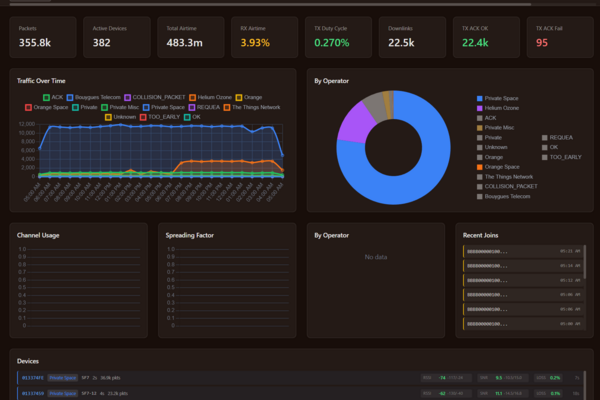
Book a Free ConsultationCurious what the finished thing looks like? Open the live demo dashboard