Choosing the Right LoRaWAN Sensor: A Buyer's Guide That Avoids Expensive Mistakes
The Mistake That Scales 500×
There are hundreds of LoRaWAN sensors on the market, from dozens of manufacturers, spanning a price range of five-to-one for what looks on paper like the same measurement. They all claim long battery life. They all claim long range. They all show a tidy datasheet with green checkmarks. And a significant fraction of them will quietly fail in your deployment, not because they're bad products, but because they were the wrong choice for the conditions, the region, or the way you need to operate them.
The painful part is the timing. A poor device choice is invisible at proof-of-concept, where one sensor sits on a desk next to a gateway. It becomes very visible at scale, when three hundred are installed across a site and a third of them underperform. By then the fix isn't a setting, it's re-procuring and re-installing hardware across the entire deployment. The cost of the wrong device is its price multiplied by your fleet size, plus the labour to rip it out and replace it.
This guide is the vendor-neutral checklist I use before a client commits. It won't name brands, because the right device depends entirely on your use case, but it covers the criteria that actually decide whether a sensor succeeds in the field.
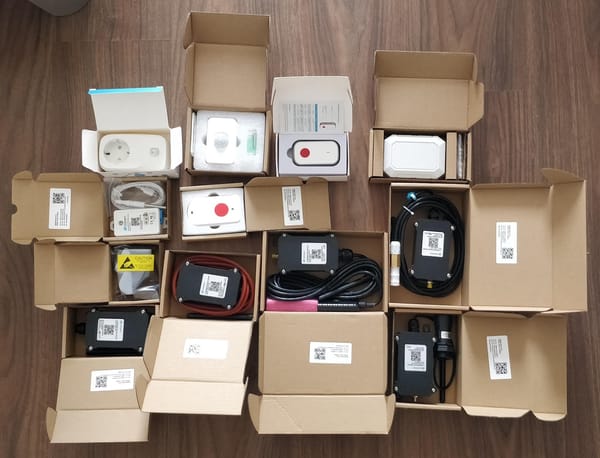
The datasheet tells you what a device does in a lab. Deployment is about what it does on a basement wall, in winter, three years from now, running the same firmware it shipped with because you chose a device proven enough not to need touching. Those are different questions, and only some of them are on the datasheet.
Start Here: Region and Certification
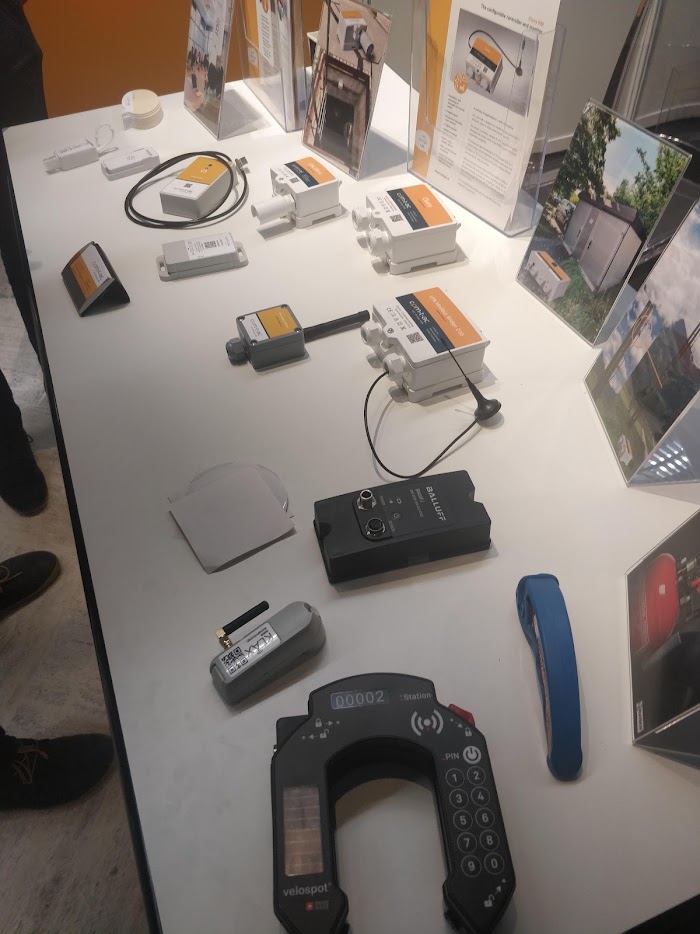
Before any other criterion, a device must be built and certified for the regional frequency band of the country where it will operate. A sensor made for Europe's 868 MHz band cannot legally or functionally work in a 915 MHz region: wrong frequencies, wrong rules, wrong certification. This is the most common cross-border procurement error, and it's a re-purchase, not a reconfiguration.
So, two questions. Is there a variant certified for your deployment region? Many devices ship in regional SKUs (EU868, US915, AS923, AU915, IN865), and you need the exact one for each country. And does it carry the required regulatory certification, CE/RED in Europe, FCC in the US, or the regional equivalent? Uncertified hardware, or certified hardware on the wrong band, is a compliance exposure, not just a performance risk.
If you're deploying across multiple countries, you're selecting hardware several times over. (For the full picture of bands and rules, see LoRaWAN Frequency Plans & Regulations.)
Device Class: A, B, or C
The three classes trade battery life against how quickly the network can reach the device.
Class A is the default and the lowest power. The device sleeps, wakes to transmit, and listens only briefly afterwards, which means the network can talk to it only just after it has talked to the network. That suits the vast majority of sensors, and it is the whole reason their battery life is measured in years rather than weeks.
Class B adds scheduled receive windows on a beacon-synchronised schedule, so the network can reach a device at predictable intervals. It is useful for semi-regular downlink control without paying Class C's power cost, but support is patchier than the specification suggests, so verify that both the device and your network server actually implement it before designing around it.
Class C listens continuously, making downlinks near-instant. This is what actuator control needs, a valve or a relay that must respond on command, and it effectively requires mains or external power.
The rule of thumb: sensors that report are Class A; things you command in real time are Class C. An actuator that's Class A will feel broken, because you can't reach it on demand.
Activation and Security: Insist on OTAA
Prefer devices that support OTAA (Over-The-Air Activation), where the device performs a join handshake and the network generates fresh session keys. Avoid relying on ABP (Activation By Personalization), where static keys are hard-coded into the device, unless you have a specific isolated reason: ABP is harder to manage securely and is vulnerable to replay if frame counters reset. A device that only supports ABP constrains your security posture. (The full reasoning is in Is LoRaWAN Secure?.)
While you're evaluating, confirm the device lets you control its root keys rather than locking provisioning to a manufacturer's cloud. Key custody is part of owning your deployment.
Firmware Quality: The Failure You Cannot See on a Datasheet
More field problems trace back to firmware than to radios, batteries, or enclosures, and it is the one thing you cannot inspect before buying. Two sensors with identical hardware can behave completely differently on a real network.
What separates good from bad is behaviour when something goes wrong. A well-implemented stack respects duty cycle and airtime limits, backs off between failed joins instead of retrying every thirty seconds, honours ADR and MAC commands, and rejoins by itself after a gateway outage. Poor firmware has recognisable symptoms: devices that go silent after a few weeks and need a power cycle, fleets that rejoin simultaneously after an outage and swamp the gateway, batteries drained months early by aggressive retries, confirmed uplinks enabled by default for data nobody needed acknowledged. Ask whether there is a watchdog, because without one a lockup lasts until somebody drives out to the device.
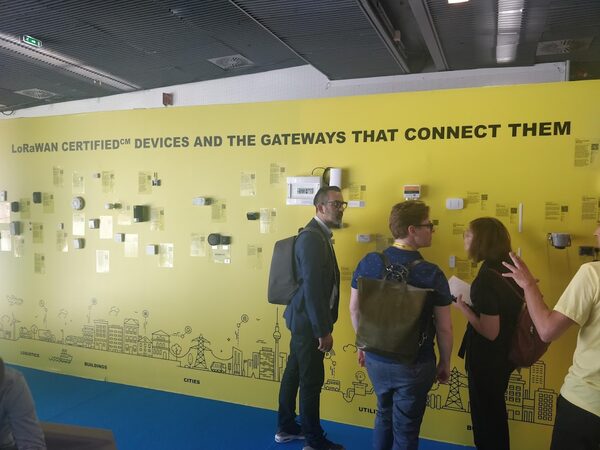
One signal is worth knowing, because it gets confused with the marks above: LoRaWAN Certified is the LoRa Alliance's protocol conformance programme, separate from CE/RED or FCC, which cover only the radio. A CE-marked device can still implement the stack badly. It isn't proof of good firmware, but it means somebody tested the protocol behaviour, and its absence on a mature product is worth a question.
Then ask for the version history. A device shipping 1.0.2 released last month is a different risk from a third-generation build with three years of fixes behind it, and a vendor who can produce a changelog is one who tracks their own defects. And test it: a deliberate gateway outage during the field trial, long enough to force a rejoin, tells you more than any datasheet.
FUOTA: Usually a Trap
It's tempting to require FUOTA (Firmware Update Over The Air) so that a future bug doesn't mean visiting every sensor. For the large majority of deployments my advice is the opposite. FUOTA fights everything LoRaWAN is good at: low data rates and strict airtime limits make pushing an image slow and fragile, and an update can saturate your duty-cycle budget and still fail partway, leaving devices in mixed firmware states.
The better answer is to not need it. Choose mature firmware, validate it properly, and change behaviour through simple downlink commands, reporting intervals, thresholds, and modes, rather than full firmware replacement. That covers nearly every real "we need to change something" situation, and a spare-swap maintenance model usually beats a remote re-flash. FUOTA earns its keep only at ultra-large scale with genuine R&D budget, where tens of thousands of devices make a truck roll impossible and the system is designed around it from day one. Decide it consciously at selection time rather than inheriting it.
Power: Battery Life, Efficiency, and the Cell
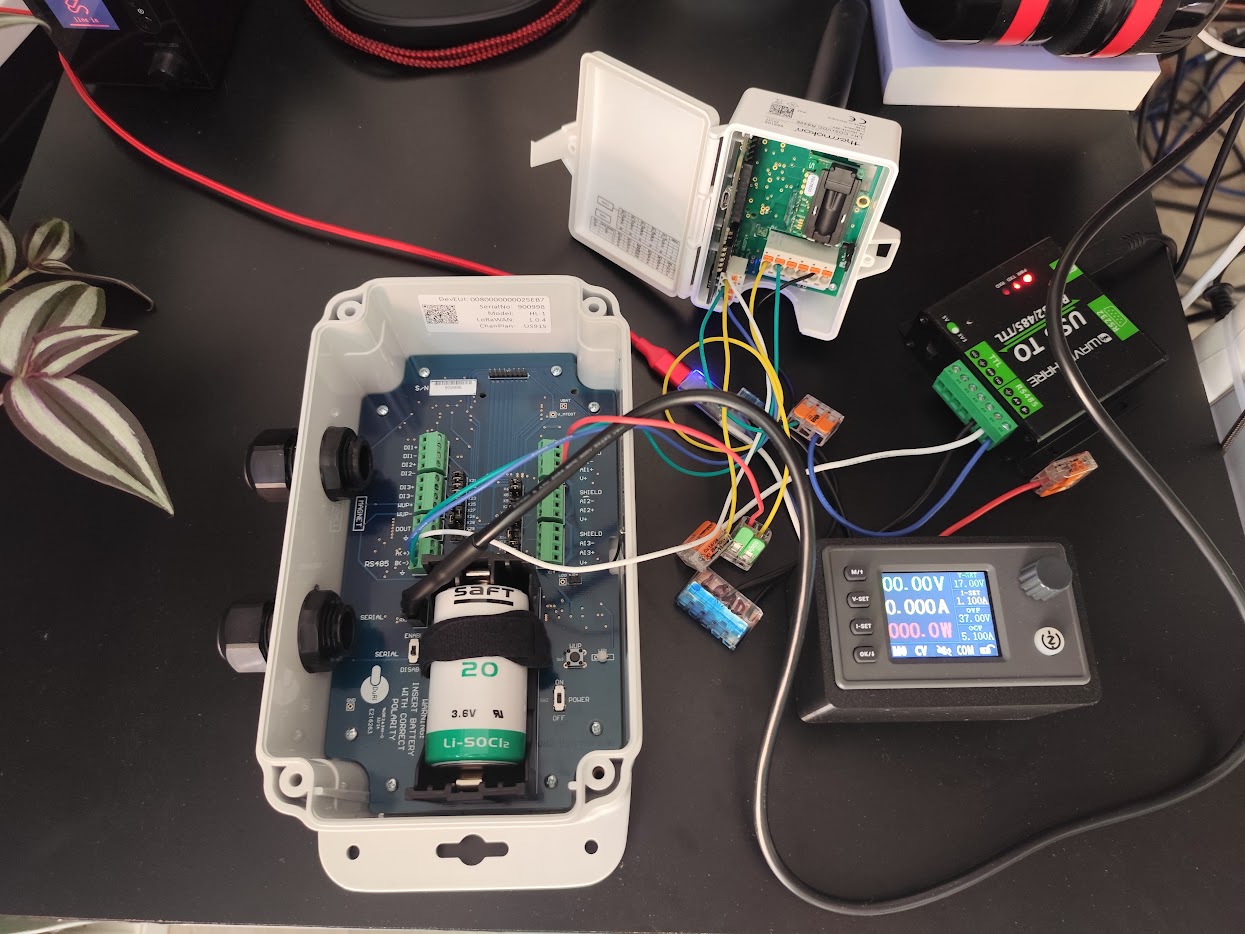
Battery claims are best-case figures from ideal conditions. Three things change the real number: reporting frequency, since an hourly sensor far outlives a per-minute one and the headline figure assumes infrequent reporting; spreading factor, since devices far from the gateway spend much longer on air per message, which ties battery life to your coverage map; and temperature, since cold crushes capacity and lithium chemistries differ widely in cold-weather behaviour.
Underneath those sits the device's own efficiency, which varies more than any datasheet suggests. A sensor spends almost its whole life asleep, so sleep current dominates: 3 µA and 30 µA idle are different lifetimes on the same cell, and a two-week bench test cannot tell them apart. Where candidates are close, ask for sleep and transmit current instead of the headline figure. Those you can compare and verify; "up to ten years" you cannot.
The cell deserves the same scrutiny as the electronics. Most long-life sensors use lithium thionyl chloride, excellent energy density and very low self-discharge, but unbranded cells with optimistic capacity ratings are a common way to hit a price point. Two details matter in the field: LiSOCl2 passivates in storage, so a device that sat in a warehouse for a year can struggle on its first transmissions, and its high internal impedance means the uplink current pulse needs a hybrid layer capacitor alongside the cell. Without one, the device browns out at high spreading factor in the cold, precisely the condition it has to survive.
Ask too whether the cell is a standard replaceable size or a proprietary pack you'll be buying from this vendor for a decade, and whether the device reports its own battery state so you can schedule replacements rather than discover them. For mains-powered devices, confirm the input voltage matches what's actually available on site (24 V DC and 230 V AC are both common industrially; not every location has both), and consider whether replaceable cells or sealed units suit your maintenance model, since sealed units mean replacing the whole device.
Build Quality: Materials, Sealing, and the Sensor Inside
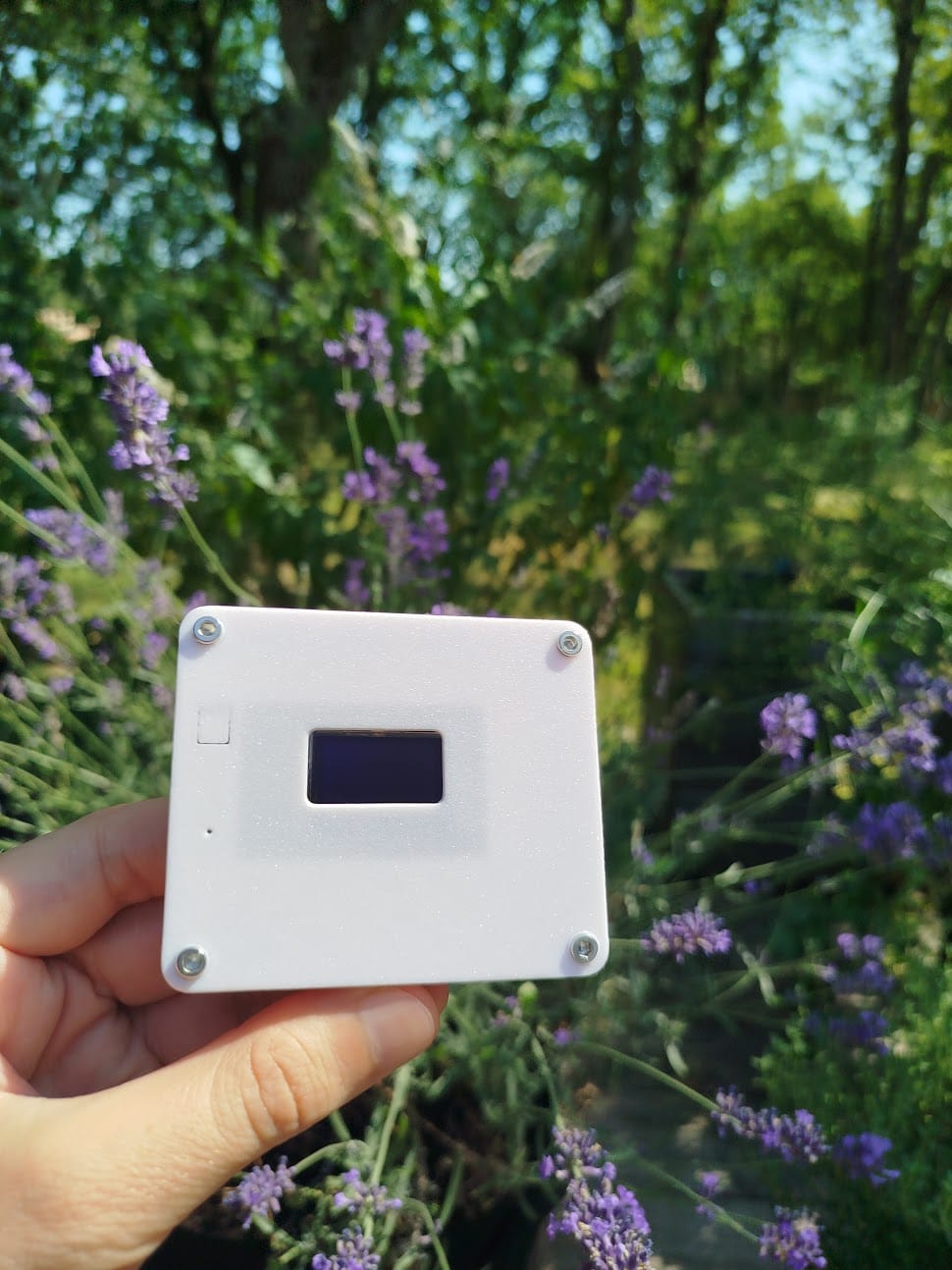
Where the device lives dictates how rugged it must be. Indoor climate-controlled use is forgiving; outdoor, washdown, or dusty environments need IP65/IP67 and above, and an indoor-rated sensor in an outdoor location is a guaranteed early failure. Match the operating temperature range to the real environment including extremes, confirm the thing can physically mount where you need it, sometimes via a custom bracket, and settle the antenna question: internal PCB antennas are fine near a gateway, while an external option can be the difference between a reliable link and a dead spot at the edge of coverage or inside metal.
An IP rating describes a design, though, not the product's fifth summer. Unstabilised ABS chalks and turns brittle in direct sun within a couple of seasons where UV-stabilised polycarbonate or ASA does not, and plated steel screws rust and seize outdoors where stainless does not. The seal should be a captive moulded gasket or an O-ring under even screw compression, not adhesive foam, and it has to survive reopening, since most battery replacements mean opening the box. On probe-style devices the cable gland is the usual leak path. Where condensation cycles, in unheated buildings or cold stores, ask whether the PCB is conformally coated: condensation kills more outdoor electronics than rain does.
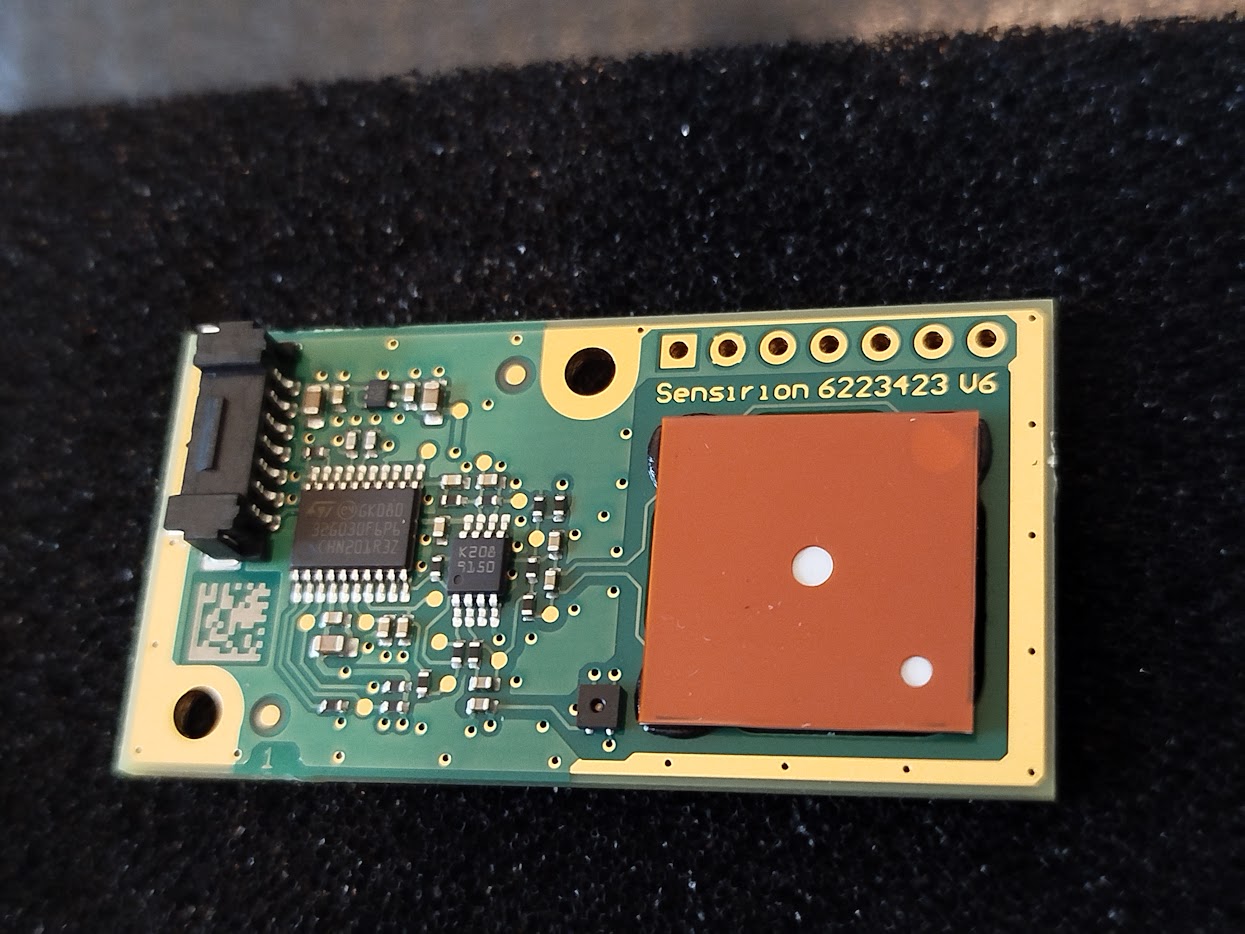
Then there's the part that actually takes the measurement, which datasheets often skip. Ask which sensing element is inside: a named part with its own accuracy and drift specification says the vendor chose deliberately, and a reluctant answer says something too. Read accuracy rather than resolution, since 0.01 °C of resolution next to ±0.5 °C of accuracy is marketing. For regulated work, cold chain especially, establish whether it ships calibrated, what it drifts per year, and whether it can be recalibrated rather than replaced. And check where the element sits: a temperature sensor sealed in a dark enclosure in the sun is an accurate thermometer for that enclosure.
Integration: Will the Data Actually Reach Your System?
A sensor that transmits perfectly but whose data you can't decode is useless.
Start with the payload decoder, because devices send compact binary and something has to turn it into values. Ask whether the manufacturer supplies a tested decoder for the network server you actually run. A correct one saves real engineering time; a vague or missing one means somebody reverse-engineering bytes against a datasheet.
Then configurability. Can you change reporting intervals, thresholds and behaviour remotely by downlink, or is the behaviour fixed at the factory? A device that cannot be reconfigured imposes its assumptions on your deployment permanently, and those assumptions were made by someone who had never seen your site.
Confirm compatibility with the LoRaWAN version and server you run. Most devices work fine against mainstream servers, but Class B, FUOTA and the 1.1 security features all depend on both ends supporting them, and vendors are optimistic about this in marketing copy.
Finally, prefer standards over silos. A device that only functions inside one manufacturer's platform quietly erodes the ownership and data sovereignty that made LoRaWAN worth choosing in the first place.
Supply: Can You Buy It, at Volume, on Time?
A device can pass every criterion above and still be the wrong choice because you cannot buy it, cannot buy enough of it, or cannot buy it again in two years.
Start with stock rather than a web page. Plenty of LoRaWAN products are announced, catalogued, and effectively unavailable: lead times quoted in months, production allocated to one large customer, a contact form that becomes a four-week email thread. Ask for current stock and a firm lead time in writing, per regional variant, because EU868 units sitting in a warehouse tell you nothing about when AS923 ships.
Then ask how you buy it, and from whom. Some manufacturers sell through ordinary distribution, five units in a cart today and a thousand on a purchase order next quarter. Others sell direct only, with a minimum order quantity, an NDA before they release a payload decoder, and quotations measured in weeks. Neither disqualifies a device, but the difference lands on your schedule rather than your budget. A high minimum order is a particular problem at the trial stage, since a supplier who won't sell you five units to test is asking you to skip the step that catches expensive mistakes.
Where a distributor sits in between, find out whether they hold stock or simply forward the order to the factory, and whether they carry your band, since most stock only their own market's variant. A stocking distributor earns its margin: days instead of months, one consolidated delivery, customs handled, and a real person to process a warranty return in year three.
Quantity matters at both ends, and vendors are rarely good at both. Ask for pricing at trial and at fleet quantity before shortlisting, because discount curves differ sharply between manufacturers: cheapest at ten is frequently not cheapest at five hundred, and volume breaks usually start above a hundred. Check how long a quotation holds and in which currency if the rollout is months away. Ask for delivery in tranches too, so crews aren't waiting on a single shipment and four hundred sensors aren't self-discharging in a store room.
Delivery is where a tidy plan meets paperwork. Almost every battery-powered sensor contains lithium cells, which travel as dangerous goods under UN3090 and UN3091: restricted air freight, declarations, compliant packaging, and some couriers refusing them outright, which is why devices often arrive with the battery disconnected. Confirm the manufacturer can genuinely ship cells to your country. Crossing a border adds customs, duties, and sometimes import paperwork specific to radio equipment, while sea freight trades five to eight weeks for a much lower cost at fleet volume.
Then assume the date slips, because quoted lead times do: a factory shutdown over Chinese New Year, a component substitution that triggers re-testing, a container held at customs. Ask for a shipping date rather than a lead time, since a lead time only starts counting when the supplier decides the order is confirmed. The sensor order is rarely the critical path by itself, but it sets the date that installation crews, roof access, site permits, and gateway commissioning are all booked around.
Finally, the second order, because year three matters as much as this one. Either the SKU is discontinued and you re-qualify a replacement for the sake of twenty units, or the batch drifts and the new order arrives on a revision that reports slightly differently, a maddening bug once half the fleet decodes one way. Buy spares with the initial order and from the same batch, and ask about lifecycle commitments and how revision changes are communicated. Some vendors state a support horizon and promise a last-time-buy notice; most won't, and the ones that do are telling you how they run the business.
The Vendor Behind the Device
Two sensors with identical specifications can be very different products to live with, and the difference is the company behind them.
Documentation is the free sample: a complete payload specification covering every message type, including the error and status frames nobody thinks about until they appear, a downlink command reference, and figures that survive contact with a multimeter. A payload table that has quietly diverged from the shipping firmware predicts the rest, and machine-translated documentation is a warning worth taking seriously, because if the manual is ambiguous the firmware probably is too.
Check the configuration software as well. Most devices are set up over NFC or USB with a vendor tool, and whether that's a maintained mobile app or a Windows executable from 2019 matters when a technician is commissioning two hundred sensors in a plant room.
Then work out who actually supports you, because there are usually two answers. A stocking distributor is your first line, in your language and time zone, handling orders and replacements. The manufacturer holds the engineering knowledge, and eventually you need it, for a payload that won't decode or a device behaving strangely after an outage. Establish whether you can reach their engineers directly or whether every question is relayed, and what that costs in days.
Pin down warranty and RMA terms in the same conversation: duration, coverage, replaced or repaired, who pays shipping each way, how long a return takes. On a fleet of five hundred, a two percent annual failure rate is ten devices a year, and the gap between an advance replacement and a six-week round trip to another continent is the gap between routine maintenance and a standing problem.
Reliability is hard to buy on paper, but you can ask. A manufacturer who tracks field failure and warranty return rates and will discuss them is a different proposition from one who has never been asked, and the honest answer is usually specific: a gasket that ages badly in direct sun, a connector that doesn't survive repeated opening, an early batch with a known issue.
The rest is ordinary due diligence. Ask a hard technical question before you buy, about a payload corner case or the behaviour after a failed join, because pre-sales responsiveness is the best available predictor of post-sales support. Look for release notes and errata the vendor admits to rather than hides, and ask other integrators in your region what they've stopped deploying. Remember too that small manufacturers disappear, get acquired, or quietly stop maintaining a line, taking firmware support and cloud-hosted decoders with them, which is one more argument for devices whose keys you hold and whose decoders live in your own stack.
The Step Most Skip: Validate Before You Scale
Every criterion above narrows the field on paper. The final step is the one that separates a deployment that works from one that surprises you: test the shortlisted devices in your actual conditions before committing to volume.
Buy a small number. Install them where they'll really go, the basement, the far corner, the cold store, the metal cabinet, not on a desk by the gateway. Run them long enough to see real signal quality, real battery behaviour, and real data through your real pipeline. A device that scores perfectly on every datasheet criterion can still disappoint in your RF environment, and it is far cheaper to learn that from five units than from five hundred. This is exactly what prevents the "we scaled and a third of them underperformed" failure that scaling from pilot to production so often runs into.
The trial batch is also your build-quality check: units dead on arrival, enclosures that don't seal, battery contacts that drop out when the device is knocked. These show up in the first fifty and tell you what the next five hundred will be like. It's the same reason the supply questions belong before the order rather than after it. Validate first, negotiate second, scale third.
A Selection Checklist
Does it belong on my network?
- Region: is there a variant certified for my deployment country's band?
- Certification: CE/RED, FCC, or the regional equivalent, and is the LoRaWAN stack itself certified?
- Class: A for sensors, C for real-time actuators, B if I need scheduled downlinks?
- Activation: OTAA, with keys I control?
- Firmware: mature version history, sane behaviour on failed joins and outages, downlink-configurable?
Will it survive the field?
- Battery: realistic life at my reporting rate, spreading factor, and temperature, and how does its sleep current compare?
- Cell: a known cell with the pulse-current support to transmit cold at a high spreading factor, replaceable, and reported back to me?
- Build: right IP rating, temperature range, and mounting, in materials that will still be sealed in five years?
- Sensing element: which part takes the measurement, what is its accuracy (not its resolution), and how far does it drift?
Will it fit my stack?
- Integration: tested decoder, remote configurability, compatible with my network server?
- Lock-in: open standards, or only a vendor's cloud?
Can I buy it and live with the vendor?
- Supply: genuinely in stock, buyable at trial and fleet quantities, deliverable on a date I can plan around?
- Longevity: will the SKU still be sold in three years for spares, and will the manufacturer still be there?
- Documentation and support: accurate payload spec, usable tooling, and who answers a hard question, the distributor or the manufacturer?
- Reliability: does the vendor know their field failure rate, and what do the warranty and RMA terms actually say?
Before committing
- Validation: have I tested it in real conditions before ordering volume?
Most expensive device mistakes trace back to a question on this list that nobody asked until it was too late.
What I Provide
Device selection is where datasheets meet reality, and where independence matters most. I don't sell hardware and I take no manufacturer commissions, so the recommendation is whatever actually fits your use case, environment, and budget. Choosing well is engineering judgement built on field experience: knowing which datasheet figures hold up, which don't, and which questions the datasheet never answers.
Device review and selection is a dedicated consulting service I offer. Send me the devices you're weighing, or just your use case and constraints, and I evaluate them against every criterion in this guide, test the shortlist in real conditions, and hand you a clear, vendor-neutral recommendation before you commit budget to a full rollout.
That covers the whole procurement path: the structured evaluation, real-world validation, and procurement strategy across regional SKUs, distribution channels, volume pricing, shipping, and lead times. It includes vetting the vendors themselves, what their documentation is worth, how their support behaves once you're a customer, and whether the product will still be on sale when you need spares. On the technical side I handle integration, payload decoders, network-server compatibility, and remote configuration, and when the right off-the-shelf device doesn't exist, custom hardware and firmware. Any decoder or firmware I deliver comes with source code and documentation, and your team gets trained to evaluate future devices themselves.
I don't charge recurring fees. I help organizations choose devices that work in the field, not just on the bench, and validate them before the order is large enough to be an expensive mistake.
Working on a LoRaWAN project?
If this article touches on something you're building, tell me about it. The first conversation is free, and you'll get an honest read on the right approach for your situation.
Book a Free ConsultationCurious what the finished thing looks like? Open the live demo dashboard