Wifx L1 Gateway - Lightweight for Maximum Height
Why Weight Changes Everything in LoRaWAN Deployments
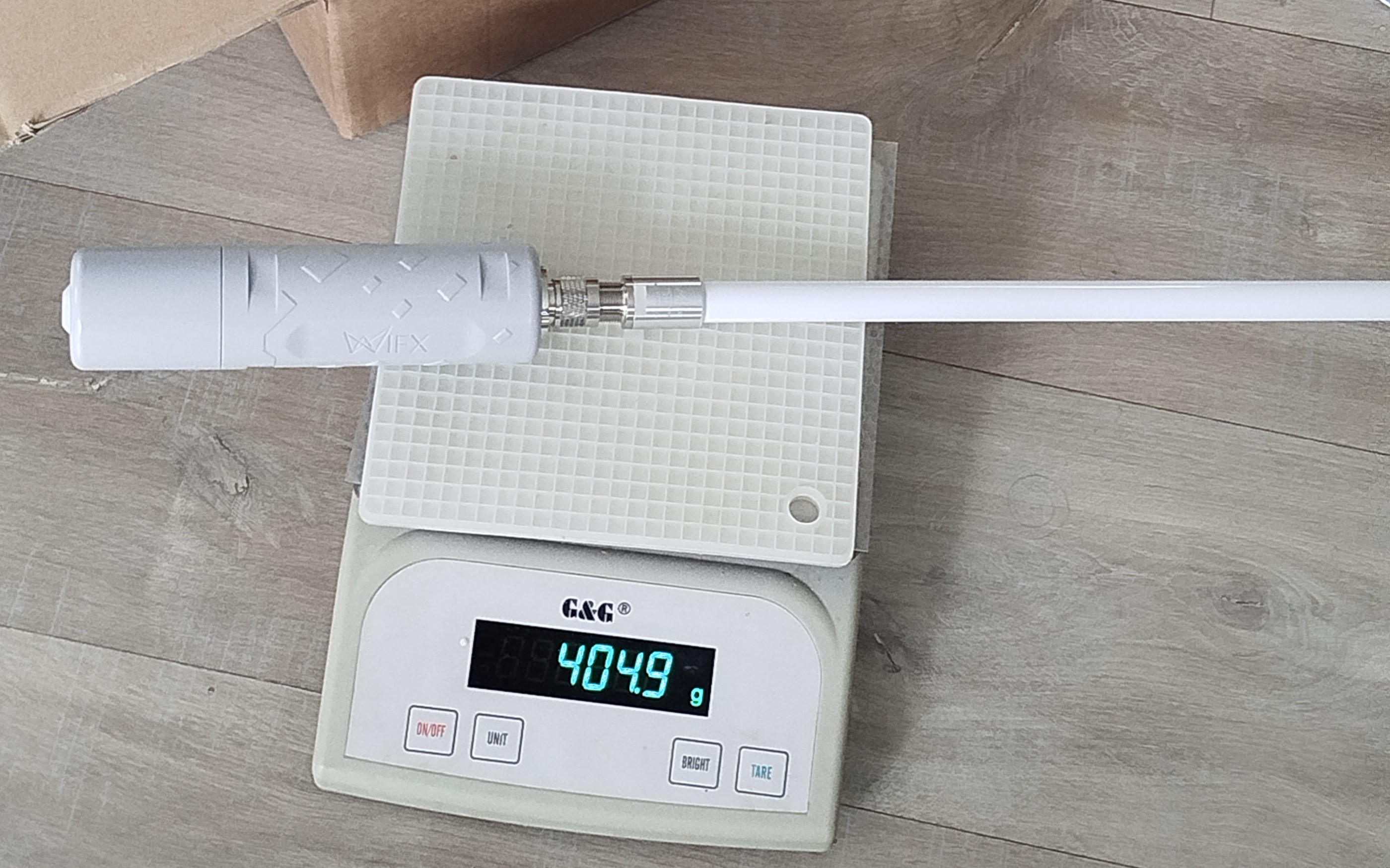
The Wifx L1 weighs 240 grams, or 405 grams with the included antenna. When I mention that to clients, the first reaction is usually a shrug. Then they carry a 5 kg industrial gateway up a 20-meter mast in moderate wind, and the point makes itself.
Weight determines where you can actually put a gateway, not just where it's theoretically possible. That water tower at 30 meters with exceptional line-of-sight? Reachable. The narrow rooftop pole with perfect coverage geometry? Accessible. The building top that needs three ladder sections? Manageable, by one person.
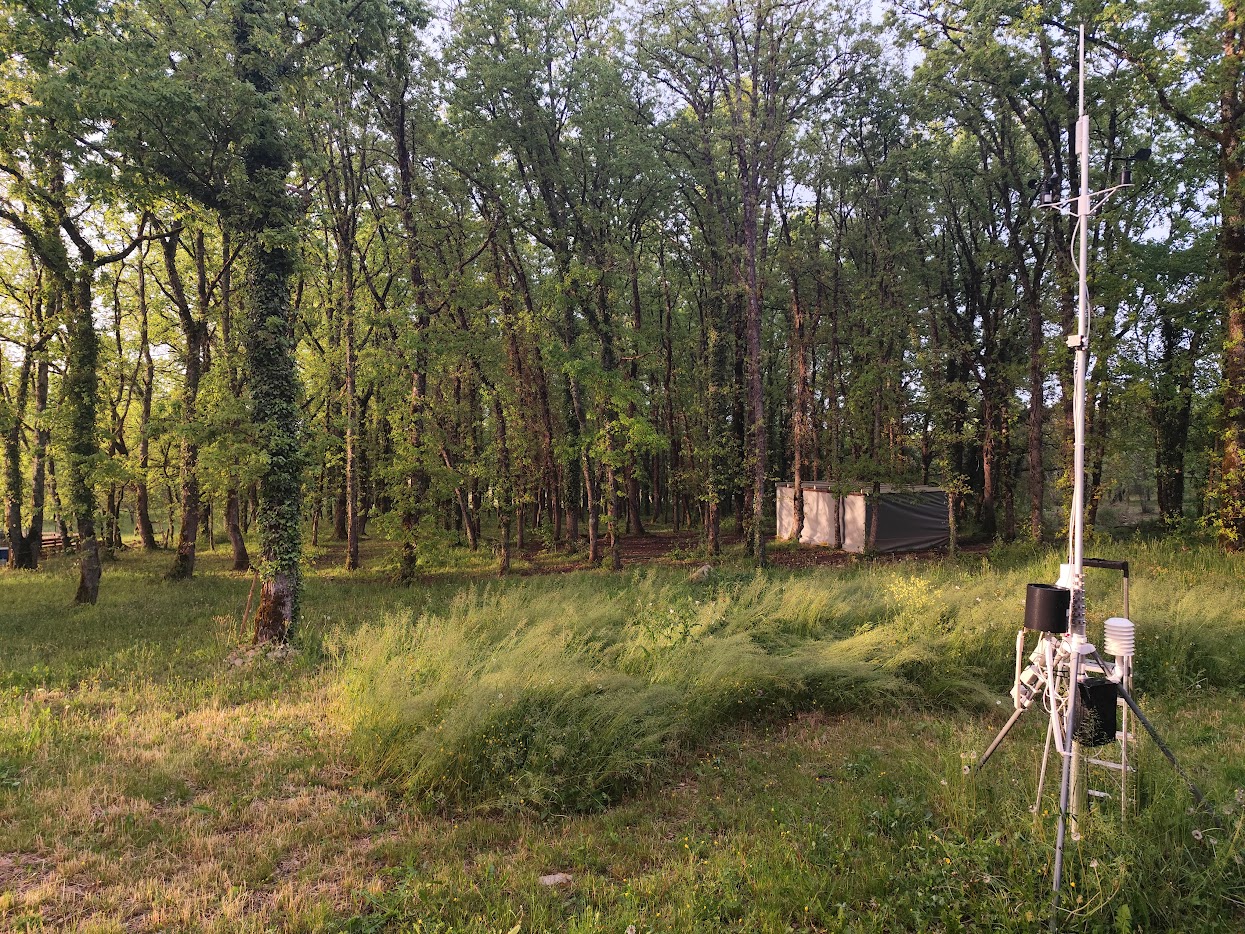
This matters because height drives LoRaWAN coverage. Every meter of elevation buys hundreds of meters of coverage radius through better Fresnel zone clearance. The catch with heavy gateways is that they end up at ground level or low mounts, not because those spots cover well, but because hoisting heavy hardware to height is expensive or dangerous. The L1's weight advantage lets you deploy where the RF physics says to, not where installation convenience forces you.
Height Is the Whole Point
The relationship between elevation and coverage isn't linear; in many urban environments it's closer to exponential:
| Installation height | Measured urban coverage |
|---|---|
| 3 m | ~2 km |
| 10 m | ~5 km |
| 20 m | ~8-10 km |
| 30 m | ~12-15 km |
That curve comes from Fresnel zone physics: the first 60% of the signal path needs to stay clear of obstructions, and mounting higher clears the buildings and trees that would otherwise block or attenuate the signal at ground level.
Weight is what unlocks that height. Consumer gateways weigh 200-500 g but lack reliability and support. Industrial gateways add IP67/IP68 protection but weigh 1-5 kg and draw 3-10 W. The L1 sits in its own spot: 240 g, 1.2 W, IP65, professional build quality, and Swiss support. That combination makes thin poles, tall masts, and building structures viable mounting points that heavier hardware would rule out.
The Specifications That Matter
RF performance is where it counts, and the L1 is excellent: -139 dBm receiver sensitivity at SF12BW125, among the best available, and 27 dBm transmit power, well above the 14 dBm of typical consumer devices and matching or beating industrial gateways. That translates straight into coverage at the network edge, where every dB decides whether a marginal device connects.
Power draw is 1.2 W typical, 1.5 W maximum, exceptionally efficient against the 3-10 W of typical industrial hardware, and that efficiency is what shrinks the solar infrastructure a remote site needs.
Connectivity is Ethernet backhaul at 10/100 Mbps with passive PoE over a wide 10-48 Vdc input, which gives real flexibility for power injection. A USB-C interface provides both serial console and Ethernet for easy configuration and troubleshooting, and a microSD slot adds storage for local data logging and custom applications, something closed industrial gateways often can't do. Cellular backhaul exists only on the L1 4G model and must be specified at purchase; it isn't field-upgradeable.
Environment: it operates from -30°C to +70°C, covering the vast majority of deployments, and carries an IP65 rating, dust-tight with water-jet resistance. That's a genuine difference from the IP67/IP68 of heavy industrial units rated for temporary submersion. For standard pole mounting, IP65 handles rain and spray fine; if your site risks flooding or submersion, choose a higher rating.
Origin: Swiss design and manufacturing from Wifx (formerly LORIX), which shows up in consistent quality control and responsive support, both of which matter once you're running production infrastructure.
What Makes the L1 Stand Out
The efficiency and the low mass compound into a series of practical wins.
On power, 1.2 W rewrites solar economics: a 10 W panel and a modest battery run it indefinitely, versus the 25-50 W+ panels a typical industrial gateway demands, cutting solar hardware cost substantially before you've even factored in the lighter, easier mounting.
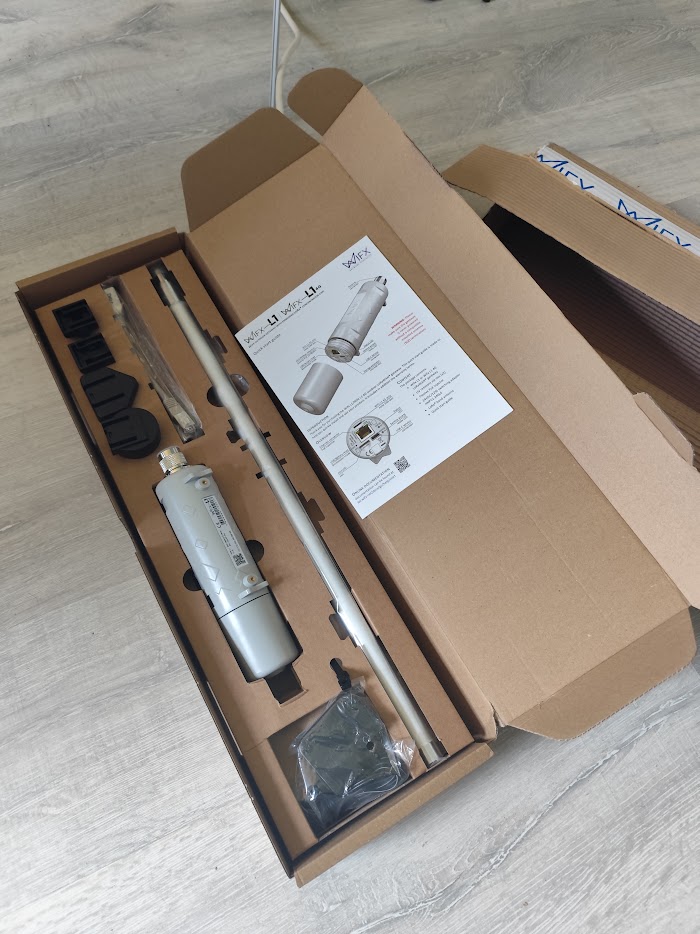
On installation, one person carries it up a ladder, no cranes, no lifting gear, no crew. Mount the gateway, fit the antenna, connect PoE, configure, and you're done in 30-45 minutes rather than the 2-3 hours a heavy gateway takes, straight labor savings and faster rollouts. The light weight also opens up thin 40-60 mm poles that can't carry heavier hardware, and at 20-30 meters it presents far less wind loading, so the pole needn't be as rigid nor the mounting as heavy, which helps both cost and long-term structural reliability.
It also eliminates cable losses. Because it weighs 240 g, the gateway mounts at optimal antenna height instead of sitting at ground level with a long coax run up to a rooftop antenna, the usual compromise with heavy gateways. The gateway goes where the antenna goes, removing cable loss, cost, complexity, and the water-ingress problems that plague outdoor coax.
On software, it runs LORIX OS, an operating system purpose-built for LoRaWAN gateways rather than generic Linux with a packet forwarder bolted on. Updates are reliable, configuration is straightforward, and it works with ChirpStack, The Things Network, and AWS IoT Core without heavy customization. A further point worth flagging: an upcoming firmware release is expected to add native ChirpStack Gateway Mesh relay, letting gateways relay traffic between each other without direct backhaul. To my knowledge no other manufacturer offers this as an official, out-of-the-box feature. Some hardware, including DIY Raspberry Pi builds, runs ChirpStack OS and handles mesh well, but those aren't outdoor, carrier-grade products, and getting mesh working elsewhere usually means compiling it yourself, a barrier most operators aren't equipped for. Integrated directly into LORIX OS, it would put the L1 in a class of its own where mesh coverage is a requirement.
And on support, Wifx being a Swiss company means real technical help in English, German, and French, not an outsourced script, with firmware updates continuing for years after purchase. That distinction matters most at 2 AM with a gateway down.
Realistic Limitations
Two things to plan for, and one caveat. The IP65 rating handles typical outdoor conditions well but not submersion, so flood-prone or immersion scenarios call for an IP67/IP68 gateway instead. Cellular backhaul isn't field-upgradeable, so if you might need it, order the L1 4G model up front. As for track record, the L1 is newer hardware, but its predecessor, the LORIX One, built a solid multi-year reliability record, and the L1 improves on that foundation.
Where the L1 Excels
Urban coverage networks benefit most, since the L1 goes onto tall rooftops in the 20-40 meter range without the structural analysis of roof attachment points that delays heavier gateways, and a single well-placed unit at that height typically covers a 5-10 km radius depending on density and terrain, often replacing several lower-mounted gateways.
Rural agricultural sites frequently mean tall poles, grain silos, and water towers, where hauling heavy hardware up is a real logistics problem; the L1 turns those from multi-person operations with specialized equipment into straightforward single-person jobs.
Temporary deployments for events or construction gain from how quickly it goes up and comes down, making genuinely portable infrastructure feasible rather than just possible.
Solar-powered remote sites are where the numbers are starkest. At 1.2 W, a 10 W panel, 20 Ah battery, and basic charge controller cover it, roughly 110-170 EUR of solar hardware at about 5 kg total. A typical 3-10 W industrial gateway needs 20-50 W panels and 50-100 Ah batteries, pushing that to 200-550 EUR and 12-25 kg. For a 20-meter pole, carrying 5 kg versus 25 kg is the difference between one person in one trip and a challenging multi-trip deployment.
Installation Notes From the Field
Don't squander the weight advantage on convenient-but-low mounting: if you can reach 20 meters, do it, because a gateway at 20 m with a standard antenna consistently beats one at 10 m with a higher-gain antenna, since elevation buys line-of-sight clearance that gain can't. Use proper outdoor mounting brackets on 40-60 mm poles rather than improvised solutions, and secure the cable with zip ties every 2-3 meters, since wind-induced movement kills Ethernet cable over time. Feed it with passive PoE across its wide 10-48 Vdc input, which suits direct solar/battery setups without voltage regulation, and run outdoor-rated CAT5e or CAT6, because indoor cable degrades under UV and temperature cycling. The stock 5 dBi omni suits most deployments; the light frame lets you step up to a 6-8 dBi antenna without structural worry, or a ~12 dBi directional for defined sector coverage.
Real-World Performance
Range, as always with LoRaWAN, depends on terrain: flat line-of-sight reaches impressive distances, while hills, dense urban fabric, or any obstruction cut it down, and the L1's strong receiver sensitivity helps maximize whatever the environment allows. On reliability, field reports show 99%+ uptime, well ahead of budget consumer gateways and comfortably among industrial options, which tracks with LORIX OS stability and Swiss build quality.
When It's Worth It
For anything beyond a proof-of-concept, the L1 earns its price over a 200 EUR consumer gateway through professional support and purpose-built software that consumer hardware can't match. For solar deployments it's an easy recommendation, since the 1.2 W draw saves roughly 300-500 EUR of solar infrastructure and the ROI is close to immediate. For urban networks chasing maximum coverage, the weight advantage enables the 20-30 meter mounting that heavier gateways can't reach, and one well-placed L1 can stand in for several lower ones. For remote sites, low power (solar-friendly), light weight (mountable at height), and stable software (fewer site visits) combine to make deployments economical that otherwise wouldn't be. Where you truly need maximum environmental protection or an established enterprise vendor relationship, a heavier industrial gateway is still the better fit.
Need Help With Your LoRaWAN Deployment?
If you're weighing the L1 against heavier alternatives, or working through the mounting, solar sizing, and mesh questions this article touches on, that's the work I do every week: gateway selection, network design, custom development, and training, delivered with full source code and documentation so you own the result.
Talk to an expert about your gateway deployment.
Working on a LoRaWAN project?
If this article touches on something you're building, tell me about it. The first conversation is free, and you'll get an honest read on the right approach for your situation.
Book a Free ConsultationCurious what the finished thing looks like? Open the live demo dashboard