LoRaWAN Irrigation Control Systems
Why Automate Irrigation
Most irrigation runs on a fixed schedule, "4 hours every 3 days," regardless of whether it rained yesterday or the soil is already saturated. It's simple to program and wasteful in practice.
I've measured it: soil-moisture-based control cuts water use by 30-50% against fixed schedules. Crops get water when they actually need it rather than when the timer says so, so plants do better, water bills drop, and you stop irrigating through a rainstorm. It's a simple upgrade with significant impact.
System Components
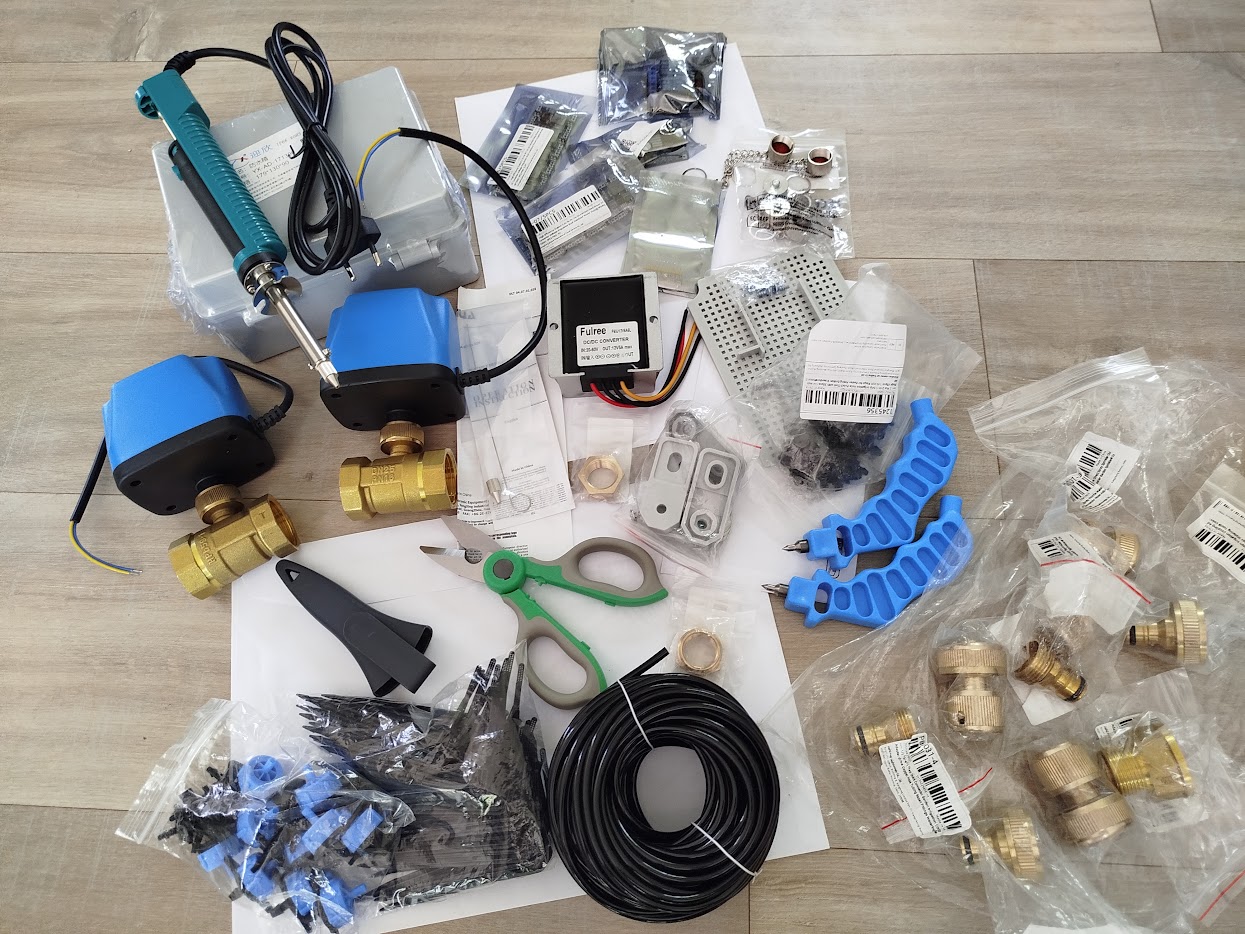
The sensors are what turn irrigation from guesswork into a decision. Soil-moisture probes at root depth measure actual water availability, with capacitive or TDR types giving the volumetric water content that drives the logic. Soil and air temperature sensors feed evapotranspiration calculations to predict crop demand, a rain gauge skips scheduled irrigation after precipitation, and where salt accumulation threatens crops, a soil EC sensor adds salinity monitoring.
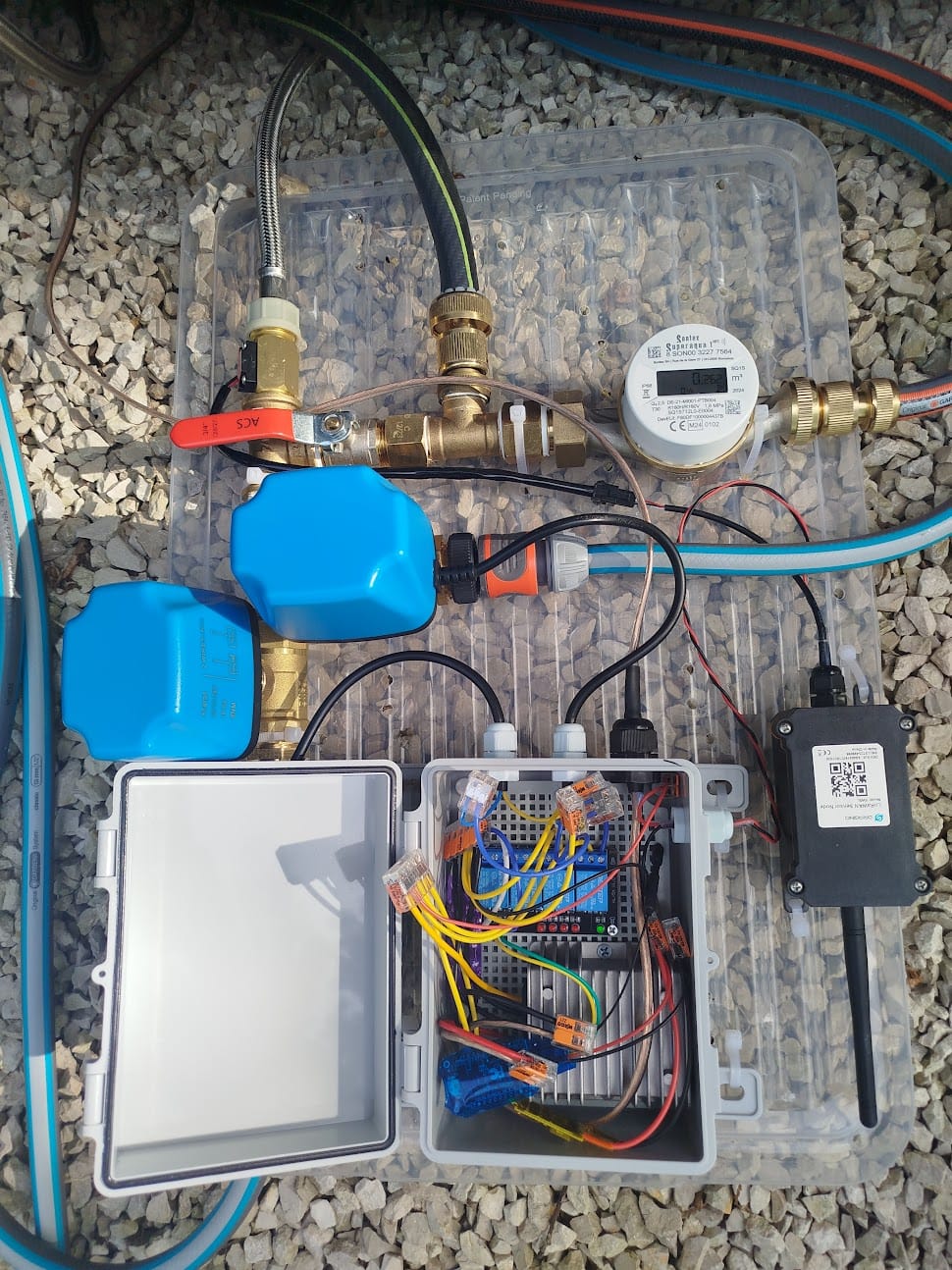
On the control side, LoRaWAN solenoid valve actuators running on 12 V or 24 V gate water to each zone, while pulse counters meter the actual flow to catch leaks, broken pipes, and clogged emitters. Battery or solar power keeps it running in fields with no grid, and latching solenoid valves, which draw power only when they change state, stretch the time between maintenance visits.
Tying it together, LoRaWAN gateways cover agricultural terrain wirelessly without cellular infrastructure, a network server (ChirpStack, The Things Network, or a commercial platform) handles device management and routing, and InfluxDB stores the time-series data while Grafana visualizes it and a control engine applies the automation rules against sensor readings and crop requirements.
Control Strategies
The simplest strategy, and the most reliable, is a soil moisture threshold: open the valve when moisture drops below a setpoint, say 25% volumetric water content, and close it once the target is reached at around 35%. It is easy to reason about and easy to defend when someone asks why the water ran.
ET-based scheduling is the more sophisticated option. It calculates the daily water deficit from temperature, humidity and solar radiation, then irrigates to replace exactly that, which is more complex to set up but holds up far better as a crop moves through its growth stages.
Either strategy benefits from multi-zone control, since different crops and different soils want different schedules. This is where LoRaWAN earns its place: individual zone control across large areas without trenching a single control wire.
Typical Applications
Vineyards are an unusual case, because the goal is often not to avoid stress but to apply it deliberately: controlled water stress at particular growth stages concentrates sugar and improves grape quality. Sensors at several depths are what keep that intentional stress from tipping into genuine over- or under-watering.
Orchards run drip irrigation with soil-moisture monitoring, and at 50 hectares and beyond the range is the whole argument, since there is usually neither cellular coverage nor any appetite for trenching cable across the block.
Row crops integrate the same sensors into center-pivot or linear-move systems, which then start and stop on measured field conditions rather than on a timer. Greenhouses go the other way, packing many small zones into a small area, each with its own moisture and temperature monitoring and automated fertigation tied to the growth stage.
Hardware Selection
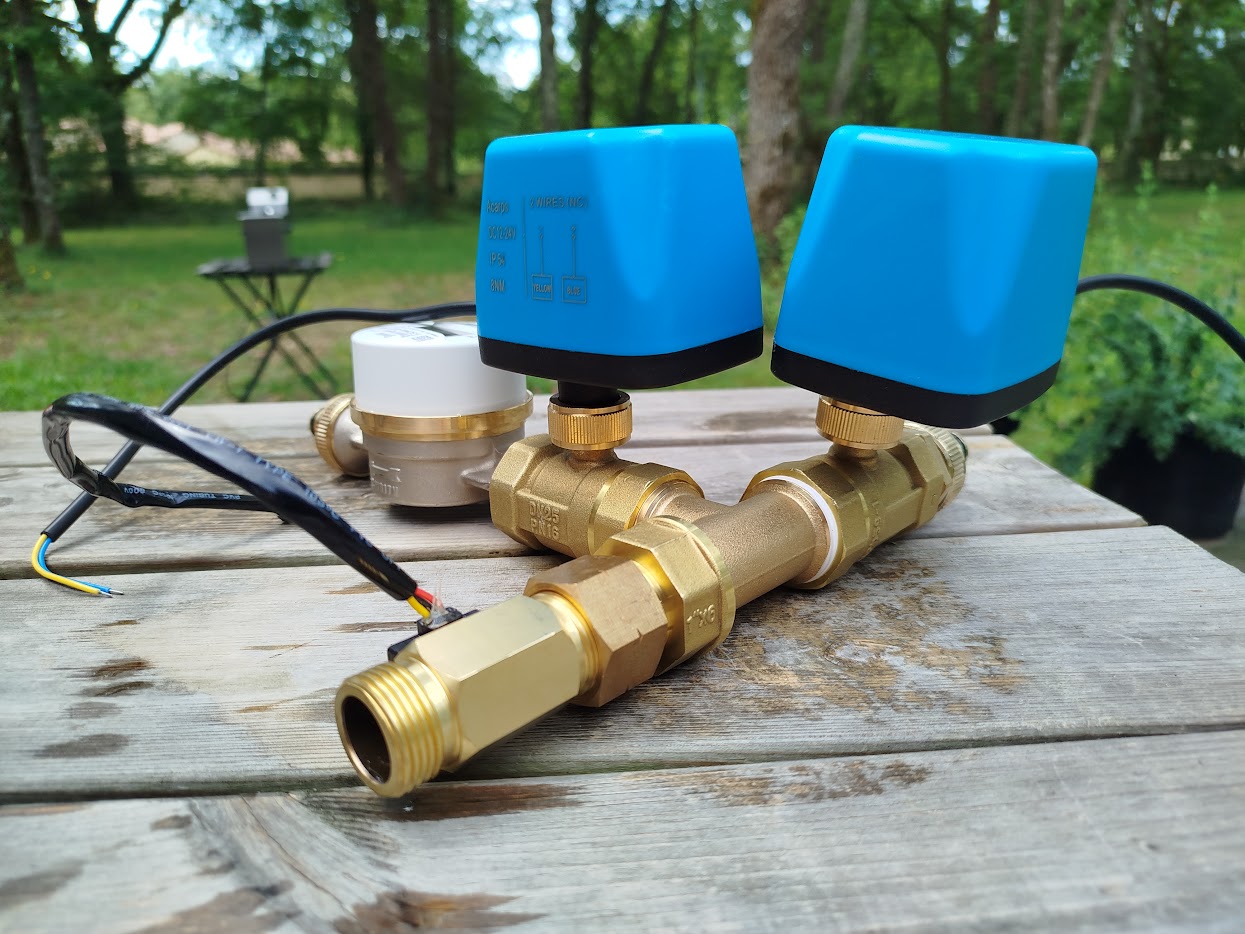
For soil-moisture sensors, capacitive types suit most agricultural applications, giving reliable volumetric readings at a reasonable cost, while TDR sensors add the precision that research or lab-grade accuracy demands; place either at crop root depth, typically 30-60 cm depending on the crop, where they measure what the plant can actually draw. For valve control, latching solenoids draw power only during a state change, ideal for battery installs, whereas non-latching valves need continuous power to stay open and consume far more, and a LoRaWAN valve controller combines the wireless link with the actuation so no control wire has to cross the field. For the gateway, an indoor unit works when fields are within moderate range, while an outdoor gateway on an elevated antenna often covers an entire farm from one point; since real range depends on terrain, canopy density, and antenna placement, field-test coverage before full deployment.
Common Mistakes
Three errors account for most disappointing installs. Wrong sensor placement, too close to a drip emitter or sprinkler head, gives readings that reflect the emitter, not the root zone, so place sensors between emitters where the roots actually grow. Single-point sensing, one sensor across a 5+ hectare field, is effectively useless, because soil varies and you need several sensors to understand real conditions. And no flow metering leaves you blind to what was actually delivered, since a broken pipe, clogged emitter, or failed valve is invisible without a flow meter.
What I Provide
I design irrigation monitoring and control systems from the sensor placement up: hardware specification matched to your crop, soil, and budget, LoRaWAN network planning, the control algorithms themselves (threshold-based, ET-based, or a hybrid), and the data pipeline with dashboards and failure alerts on top. Whatever irrigation infrastructure you already have, I work with it, whether that means upgrading fixed schedules to sensor-based control or designing a new installation from scratch.
You own the source code, the self-hosted infrastructure, the documentation, and the calibration procedures, with no ongoing licensing fees. The goal is water savings and better crop outcomes, not pushing specific hardware brands.
Working on a LoRaWAN project?
If this article touches on something you're building, tell me about it. The first conversation is free, and you'll get an honest read on the right approach for your situation.
Book a Free ConsultationCurious what the finished thing looks like? Open the live demo dashboard