LoRaWAN Asset Tracking: Warehouse to Construction Site
Why Track Assets
Spreadsheets list every asset. The problem is reality diverging from records: equipment moves between sites without documentation updates, inventory gets relocated but systems show old positions, theft goes undetected until someone needs the missing items.
This gap costs real money. A construction foreman spends half a morning calling other sites looking for a generator. A rental company discovers equipment at the wrong customer location weeks after the fact. A warehouse team runs a manual count searching for pallets that should be obvious.
LoRaWAN asset tracking shows where things actually are. Search time drops from hours to minutes, theft gets detected while recovery is still possible, and utilization data reveals which expensive equipment sits idle.
Two Technologies, One System: GPS Outdoors, BLE Indoors
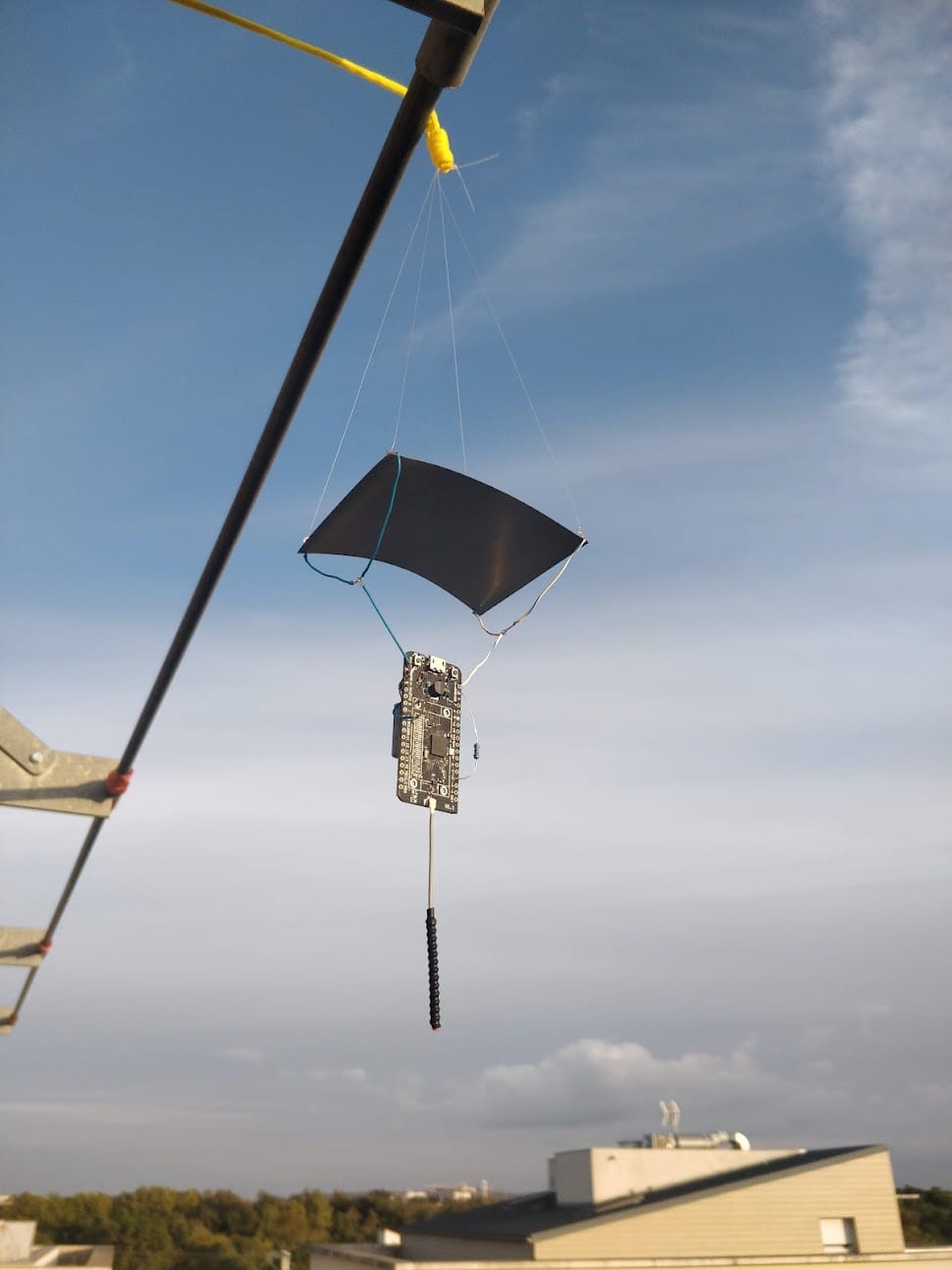
There is no single sensor that tracks everything. The right approach depends on where the asset lives, and most real operations need both.
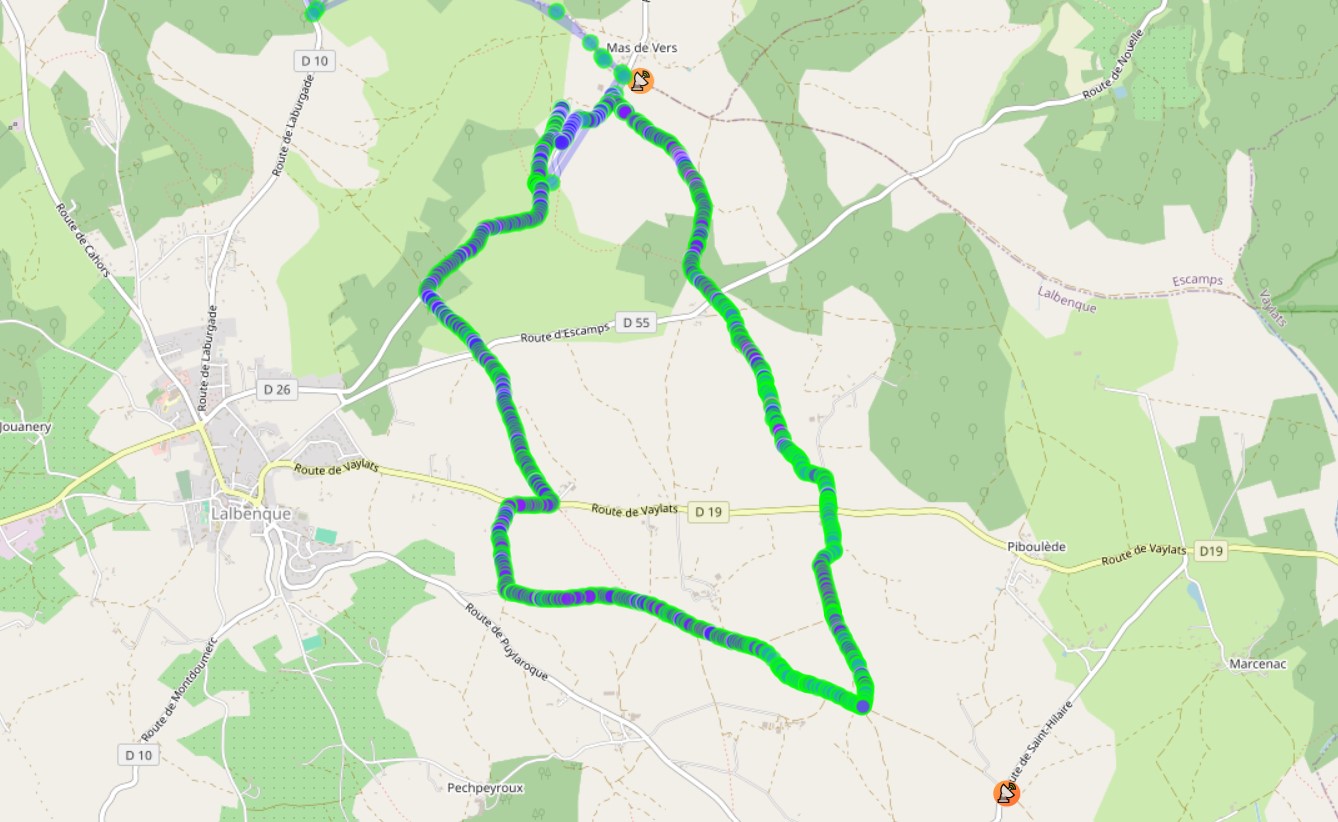
Outdoors, GPS/GNSS is the workhorse. Excavators, shipping containers, rental tools, vehicles, and trailers move across properties and between sites, and satellite positioning fixes their coordinates wherever the sky is clear. A compact, battery-powered tracker acquires a position and hands it to a LoRaWAN radio, which carries the coordinates back to a gateway covering the area. How often it reports is the single biggest design decision: daily updates stretch battery life into years, while hourly updates drain the same cell in months. Rugged IP67 or IP68 housings shrug off mud, vibration, and the general abuse of a job site.
Indoors, GPS simply stops working. Roofs and steel structures block satellite signals, and a fix becomes unreliable or impossible. The answer is Bluetooth Low Energy. Small BLE beacons clip onto pallets, bins, and tool kits and do nothing but announce their identity every few seconds. LoRaWAN gateways fitted with BLE scanners hear those announcements and log which beacon each gateway sees. Location is then inferred from proximity: if the loading-dock gateway hears beacon X loudest, that asset is at the loading dock. Because a beacon only broadcasts a tiny identifier and never runs a power-hungry GPS fix, it lasts several years on a coin cell and costs a fraction of a GPS tracker. That price gap is what makes tracking thousands of pallets or tools economical, when GPS would only ever be justified for your highest-value items.
Most deployments blend the two. Construction gear runs GPS between outdoor sites and switches to beacon detection inside the storage yard. A container tracked by satellite across the country reverts to proximity detection the moment it enters a covered terminal. Rental equipment reports its position at the customer site, then checks itself back in against the warehouse gateways when it returns. A system that speaks both languages gives you continuous visibility instead of a map that goes dark every time an asset moves under a roof.
Getting the Position You Need
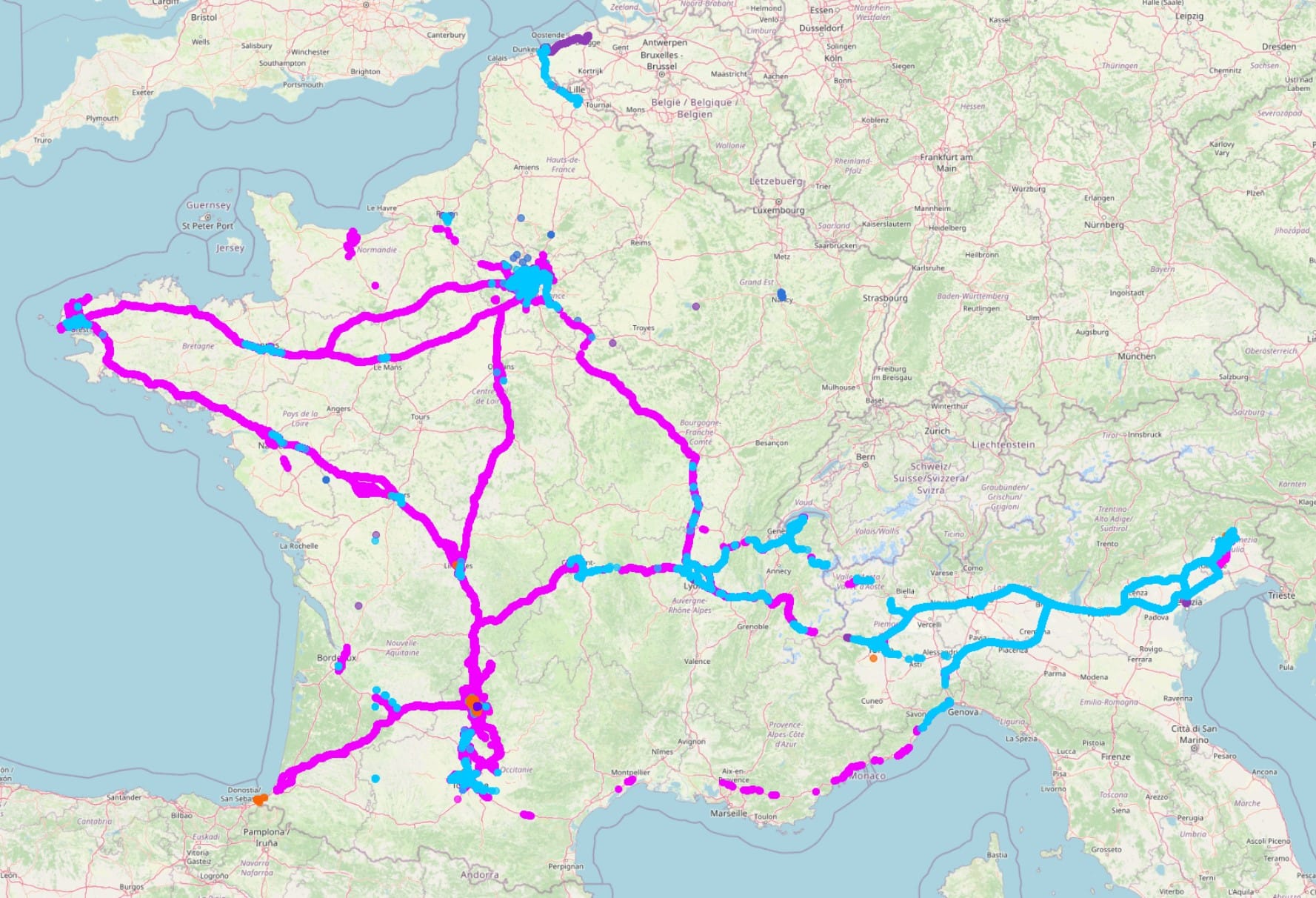
The value of a tracker is not raw accuracy, it is answering the question you actually have.
For high-value mobile assets, that question is usually "is it where it should be, and is anyone stealing it?" Geofencing answers both. Draw a virtual boundary around a job site, a storage yard, or a customer location, and the system alerts the moment an asset crosses it. Property-line fences catch theft the night it happens, while recovery is still realistic and police can act on a live location rather than a week-old memory. Site-level fences track which project has which machine. Customer fences confirm a rental landed where the contract says it should. Pair that with motion-triggered reporting, where a device sleeps while stationary and wakes only when it moves, and you get frequent updates during transit without paying for them while the asset sits still overnight.
Indoors, accuracy scales with how many gateways are listening. A single BLE-scanning gateway tells you an asset is "in the warehouse." Add a few more and comparing signal strength narrows that to "near shipping" versus "near receiving." For inventory work, that zone-level answer is usually all anyone needs: enough to walk straight to the right aisle instead of hunting the whole building.
Where It Pays Off
The mechanics above repeat across industries, but the payoff shows up differently depending on what you run.
Construction fleets span several active sites at once, and equipment migrates between them as work progresses. Instead of supervisors phoning around to locate a light tower, the map shows every machine's current site, so allocation becomes a decision rather than a guess. Job sites rarely have secure perimeters, which makes overnight theft a constant risk, and geofenced alerts are often the difference between recovering a stolen generator and writing it off. Over time the same position history exposes utilization: which expensive machine earns its keep and which one has sat idle in a yard for three weeks, quietly costing money or, on a rental, racking up daily charges it should have avoided by going back early. Layer in an hour meter and maintenance follows real runtime instead of an arbitrary calendar, so heavily worked units get serviced before they fail and idle ones don't get pulled in needlessly.
Logistics and shipping containers suffer from visibility gaps precisely where other technologies quit: cellular struggles inside a metal container stack, and GPS fades under a terminal roof. LoRaWAN gateways placed at ports, rail yards, and truck terminals fill exactly those blind spots. Inside a yard holding thousands of near-identical containers, knowing the precise slot eliminates the search entirely, cuts truck wait times, and makes stacking and retrieval efficient. Tracking dwell time across the chain exposes the bottleneck locations where cargo sits too long, and provides hard numbers when contractual dwell limits are disputed. Add temperature, humidity, or shock sensors and the same tracker also flags a refrigeration failure, moisture ingress, or a rough handling event, backing up damage claims with objective data.
Rental businesses carry more theft and loss risk than owner-operators, because equipment lives at customer sites and occasionally gets relocated, forgotten, or quietly kept. Every unit reports where it went, how long it has been out, and when it is due, with automatic alerts on overdue returns and geofences that fire if gear leaves the authorized location. Fleet-wide, the utilization picture, which categories rent constantly, which regions demand what, turns the next purchasing decision into a data-backed one instead of a hunch.
Warehouses and indoor operations lean on cheap BLE beacons to keep eyes on high-value stock, work in progress, and anything that moves around a lot. Manufacturing floors, maintenance departments, and hospitals use the same approach to track portable tools and critical equipment, so staff see the last known location instead of searching a building floor by floor. Put a BLE-scanning gateway on a doorway and check-in and check-out become automatic: assets are logged as they leave or return, without depending on anyone remembering to update a sheet.
Connecting It to the Rest of Your Stack
Tracking data is only useful once it reaches the systems your team already works in. Position updates flow into your ERP or CMMS automatically, so records stay current without manual entry and movements can trigger real workflows: open a maintenance ticket when a machine returns from the field, flag an overdue rental, or update inventory the moment goods arrive.
Modern platforms expose APIs for exactly this. A LoRaWAN network server can push positions over MQTT or webhooks, answer on-demand location lookups, and accept configuration back the other way, adjusting update frequency or redrawing a geofence remotely. On top of that sits whatever view your operation needs: assets plotted on a facility map or a geographic plot, filtered by type or status, alongside utilization reports and an alert queue that surfaces the exceptions worth acting on. None of this replaces the barcode scans and RFID gates you already run for precise identification at fixed checkpoints; LoRaWAN fills the gaps between those checkpoints, showing where an asset went after it was last scanned.
What to Watch Out For
Honest planning means respecting the limits. GPS needs a view of the sky, so it degrades in urban canyons, fades under dense forest, and dies indoors, which is exactly why the BLE layer exists. Every reporting interval is a trade between visibility and battery life, so theft-prone assets earn frequent updates and regular battery attention while low-risk inventory can report sparingly and last far longer. Trackers have to survive the environment they live in, which means rugged housings and solid mounting matter more than an extra feature or a headline range figure. And LoRaWAN only works where there is gateway coverage: multi-site operations need a gateway at each location, and assets in transit between sites will have coverage gaps, fine for inventory, something to design around for real-time theft detection.
What I Provide
I design asset tracking systems for indoor, outdoor, and hybrid environments: hardware specification matched to the assets themselves (GPS trackers for outdoor equipment, BLE beacons with scanning gateways for indoor inventory), gateway placement across multi-site operations, network server configuration, geofencing and alert rules, dashboards showing where everything is, and APIs into your ERP or CMMS, with training so your team can run and extend it. You own the source code, the self-hosted infrastructure, the configurations, and the documentation, with no per-device platform fees.
I don't sell tracking hardware or promote specific vendors. I analyze your asset types, operating environment, tracking requirements, and budget, then recommend the right mix of technologies and build a system that delivers visibility you can act on. The goal is asset intelligence that improves operations, not maximum tracker density for its own sake.
Working on a LoRaWAN project?
If this article touches on something you're building, tell me about it. The first conversation is free, and you'll get an honest read on the right approach for your situation.
Book a Free ConsultationCurious what the finished thing looks like? Open the live demo dashboard