Why LoRaWAN is the Superior Choice for IoT Connectivity
The Protocol That Changed IoT Economics
Before LoRaWAN, connecting thousands of low-power sensors meant choosing between expensive cellular plans, limited-range WiFi, or proprietary protocols that locked you into a single vendor. LoRaWAN eliminated those tradeoffs.
Developed in 2009 by Cycléo in Grenoble, France, acquired by Semtech in 2012, and standardized by the LoRa Alliance since 2015, LoRaWAN has grown into the world's most widely deployed LPWAN technology. Over 500 companies are Alliance members. Millions of devices are operating in production networks worldwide. The technology has proven itself at scale across agriculture, utilities, smart buildings, logistics, healthcare, and industrial monitoring.
What follows is the case for it, and one section near the end on where it is genuinely the wrong answer.
Range That Actually Works
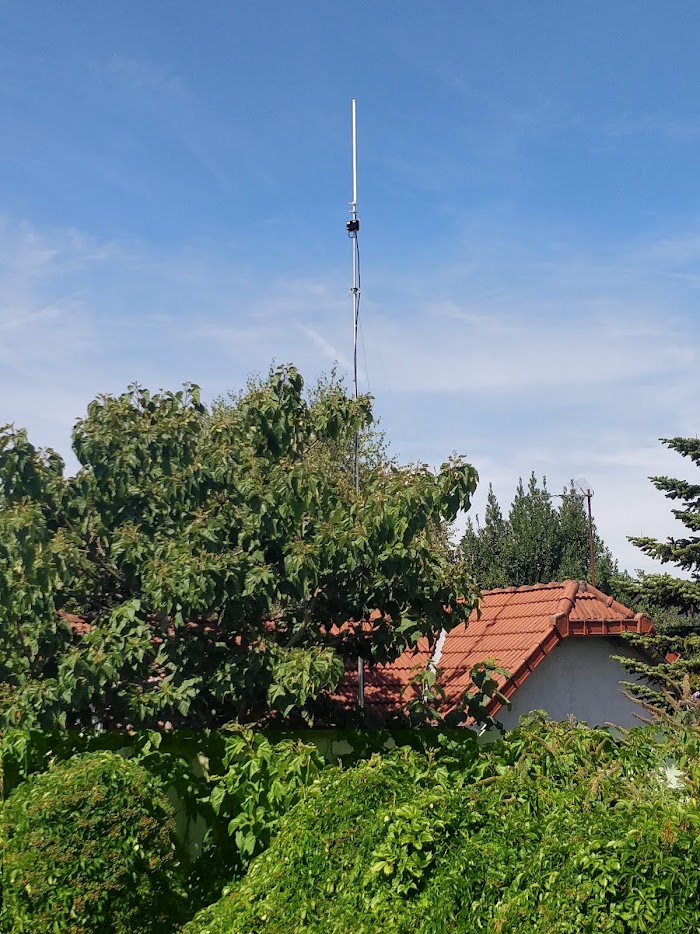
LoRaWAN operates on sub-GHz frequencies, 868 MHz in Europe, 915 MHz in North America and region-specific plans elsewhere, which is the sweet spot for long-range, low-power communication. These frequencies propagate farther and penetrate buildings better than the 2.4 GHz bands used by WiFi and Bluetooth.
Outdoors that means 5 to 15 km in typical terrain, and a great deal more when the path is clear: I have demonstrated 511 km with a high-altitude balloon tracker transmitting to ground-level gateways. Through a dense city, with buildings and interference in the way, expect 1 to 5 km, which still covers a campus, a district or a neighborhood with a handful of gateways.
Indoors is where the frequency choice earns its keep. A single gateway covers 3,000 to 5,000 square meters inside a building, and the signal gets through concrete walls, steel beams and multiple floors to reach the basements and plant rooms where higher-frequency protocols fail completely. No repeaters, no mesh, and no cabling run to the awkward corners.
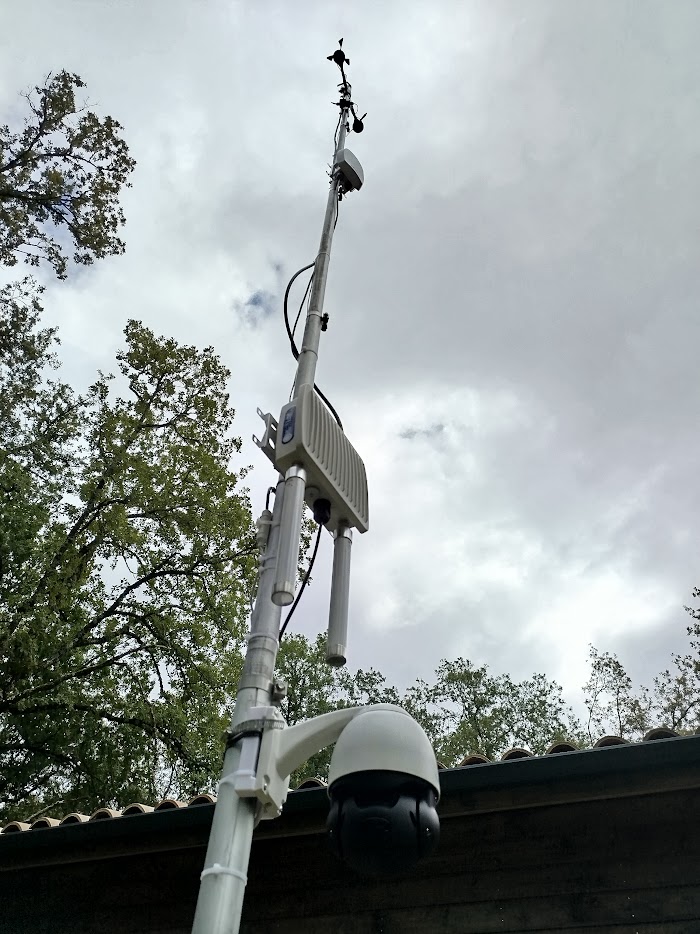
The insight that matters most in practice is that elevation beats antenna gain. A gateway mounted at 10 meters with a basic antenna outperforms a high-gain antenna at ground level, because the physics of sub-GHz propagation reward line of sight far more than they reward transmit power. Getting that right is what a range assessment is for, and it is almost always cheaper than the hardware people buy instead.
Battery Life Measured in Years, Not Months
LoRaWAN Class A devices spend 99.9% of their time in deep sleep. They wake briefly to take a measurement, transmit a tiny packet of 51 to 241 bytes, listen for a short downlink window, then sleep again. Depending on the transmission interval, that duty cycle translates to 5 to 10 years on a single battery.
Nothing else in the wireless field comes close. WiFi sensors last hours to days, because the protocol was designed for always-on connections rather than periodic sensing. Cellular IoT manages weeks to months in practice whatever the datasheet claims, because the cellular stack has to maintain network registration and that drains power continuously. Bluetooth does achieve respectable battery life as a beacon, but its 10 to 30 meter range makes it useless for anything wide-area.
The consequence is deployments you install and forget. Mount a sensor on a pipe in a plant room, on a fence post in a field, or inside a cold storage unit, and it reports data for years without a maintenance visit. Across thousands of sensors, never sending anyone out to change a battery is frequently a larger saving than the hardware cost in the first place.
Security Built In From Day One
LoRaWAN doesn't treat security as an afterthought or an optional add-on. Two independent layers of AES-128 encryption are mandatory in every compliant implementation, and they protect different things.
The network session key authenticates a device to the network, which is what stops an unauthorized transmitter injecting packets or impersonating a legitimate sensor, since the network server verifies the integrity of every message before processing it. The application session key encrypts the payload end to end between the device and the application server, and it is the more interesting of the two, because it means even the network operator cannot read your sensor data. Not the gateway, not the network server. Only your application holds that key.
Sessions are negotiated rather than configured. Over-the-air activation has the device and the network derive fresh keys through a cryptographic join, so keys are never transmitted in the clear, never reused across sessions, and can be rotated, which is fundamentally more secure than hard-coding keys into devices. Every message then carries an incrementing frame counter, so a packet captured off the air and replayed is rejected outright: the network has already seen that counter.
Most competing IoT protocols either don't encrypt at all, encrypt only at the transport layer and leave data exposed at the network level, or make encryption something an installer has to remember to switch on. LoRaWAN encrypts everything, every time, by specification rather than by configuration. What remains your responsibility is mostly key custody, which the security article covers in detail.
You Own the Network
This is the most underappreciated advantage of LoRaWAN, and on enterprise deployments it is usually the point that settles the decision.
You can deploy the entire stack yourself. The gateways are hardware you buy and install wherever you need coverage. The network server is software like ChirpStack running on your own machines. The application server processes data on your infrastructure, and the dashboards read from your databases. Nothing in that list involves a carrier contract, a monthly SIM fee, a platform subscription, or a third party whose pricing decisions, service continuity and data handling practices you have to plan around.
Every other option rents you something: a SIM, a subscription, a carrier's coverage decisions. LoRaWAN is the only major LPWAN where the gateways, the server, the keys and the data can all be yours.
Ownership shows up as a list of problems you no longer have. Sensor data never leaves your network unless you deliberately send it somewhere, so retention policies, access permissions and data residency are yours to set. A vendor's pivot, an acquisition or a price rise becomes a nuisance rather than a threat, and if a platform does turn hostile the fleet can be moved off it. Scaling from 10 devices to 10,000 means buying hardware rather than renegotiating a contract. The cost is front-loaded and predictable, which is the shape total cost of ownership takes once there is no per-device monthly line compounding underneath it.
Organizations handling sensitive data in healthcare, industry, government and utilities increasingly require exactly this degree of sovereignty. LoRaWAN is the only major LPWAN technology that makes private network deployment both practical and affordable.
The Largest LPWAN Ecosystem
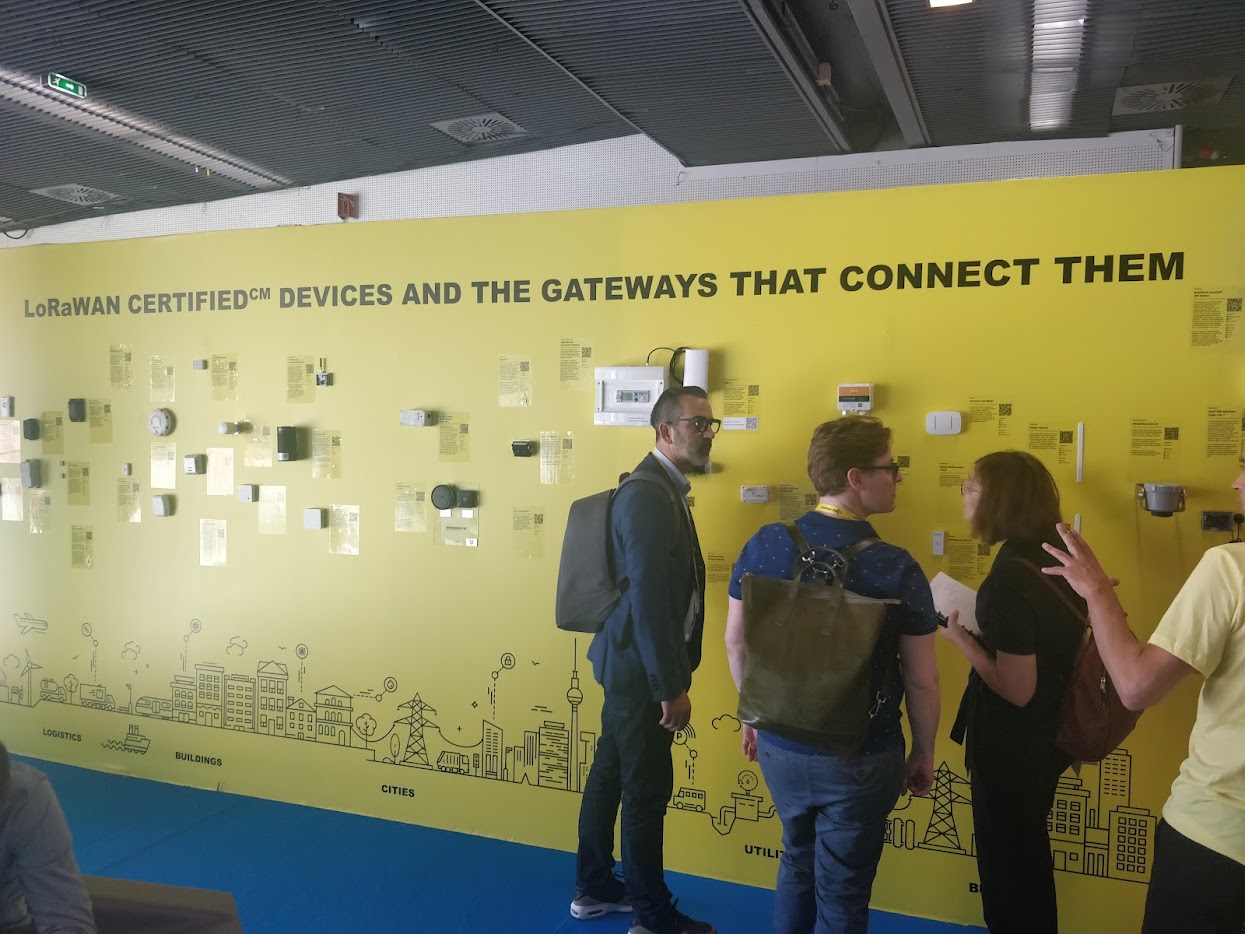
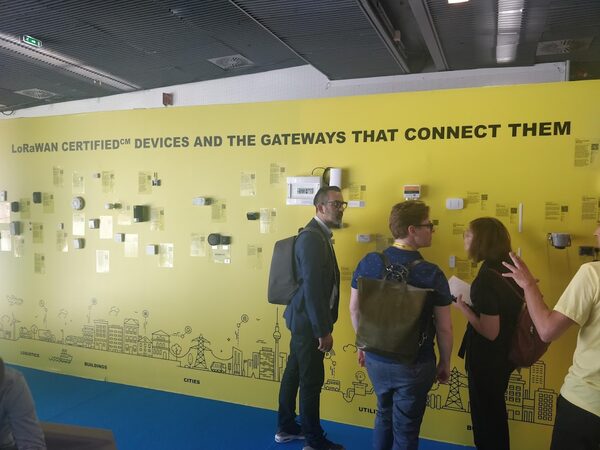
Single-vendor risk is what kills proprietary IoT projects, and the LoRa Alliance ecosystem is the direct answer to it. More than 500 member companies build into it: sensor manufacturers, gateway vendors, network server providers, system integrators and consultancies. Over 200 certified devices cover temperature, humidity, CO2, water flow, electricity metering, GPS tracking, door and window contacts, soil moisture, parking occupancy, and dozens of other measurements.
The same plurality holds at every layer. Network servers run from ChirpStack, which is open source, through The Things Network's community offering, to enterprise platforms like Actility. Gateways come from Kerlink, Multitech, Wifx, SenseCAP, RAK, Milesight and many others, across every price point and form factor.
That is what interoperability actually buys. If a gateway vendor goes out of business you switch to another. If a network server stops meeting your needs you migrate to a different one. If a sensor model is discontinued, dozens of alternatives exist, and choosing between them stays a procurement question rather than becoming an architectural one. The LoRa Alliance certification program is what guarantees it.
Proven at Scale
LoRaWAN isn't experimental technology. Utilities run smart water metering across entire cities, with millions of meters reporting consumption daily. Farms cover thousands of hectares, monitoring soil moisture, weather conditions and livestock locations. Commercial real estate portfolios use it for HVAC optimization, occupancy sensing and sub-metering. Manufacturers monitor plant, track cold chains and manage assets across supply chains. Cities run waste collection, street lighting and environmental monitoring on it.
It has been in production for over a decade. The failure modes are documented, the scaling problems have been solved by somebody already, and the device ecosystem is mature. Choosing it is an infrastructure decision rather than a technology bet, which is not something you can say about much of the IoT landscape.
Adaptive by Design
The Adaptive Data Rate algorithm optimizes each device's transmission parameters automatically. Devices close to a gateway use faster data rates and lower spreading factors, spending less airtime and less battery. Devices at the edge of coverage fall back to slower, more robust modes on their own.
The effects compound. The network tunes itself as conditions change, gateway capacity stretches further because nearby devices are not consuming airtime that distant ones need, coverage degrades gradually at the limits instead of dropping without warning, and devices recover automatically when conditions improve.
Three device classes cover the rest of the ground. Class A is the default and the most efficient, waking only to transmit, which suits periodic sensing like temperature, metering and environmental data. Class B adds scheduled receive windows for applications that need predictable downlink latency. Class C listens continuously, which costs power and therefore suits mains-powered devices that have to react immediately, such as actuators, valves and relays.
The Unlicensed Spectrum Advantage
Operating on unlicensed ISM bands removes an entire category of cost and negotiation. There are no spectrum licensing fees, no carrier to negotiate with, and no regulatory approval to obtain beyond the standard equipment compliance any radio product needs. You are not dependent on a telecom operator's infrastructure, coverage decisions or business viability, and there are no SIM cards to provision, manage, track or pay for.
The standard is global, with region-specific frequency plans covering EU868, US915, AS923 and others, so the same architecture deploys almost anywhere as a configuration change rather than a redesign. The obligations that remain are narrow: comply with duty cycle limits and transmission power caps, which the protocol design largely handles for you.
Where LoRaWAN Is the Wrong Answer
An honest case has edges, and this one has clear ones.
LoRaWAN is a low-bandwidth technology. Payloads are tens of bytes and duty cycle rules limit how often a device may transmit, so anything involving images, audio, video or continuous high-rate telemetry needs a different radio. Vibration analysis sampling in kilohertz is not a LoRaWAN application, and no amount of clever engineering makes it one.
It is also not low-latency in the sense control engineers mean. A Class A device is reachable only in the brief windows just after it transmits, so if you need to command something within seconds you are looking at Class C and mains power, or at another technology entirely.
And it runs in unlicensed spectrum, which means you share it. In a congested urban band, other networks and other devices consume airtime you have no control over, which is a genuine constraint on dense deployments and the reason noise and interference are worth measuring rather than assuming.
Where a requirement is genuinely mobile, nationwide and bandwidth-hungry, cellular is the better tool and I will say so. The LPWAN comparison works through the alternatives properly. LoRaWAN wins for battery-powered sensors reporting modest amounts of data across a fixed area you control, which happens to describe most of industrial IoT.
What I Build With LoRaWAN
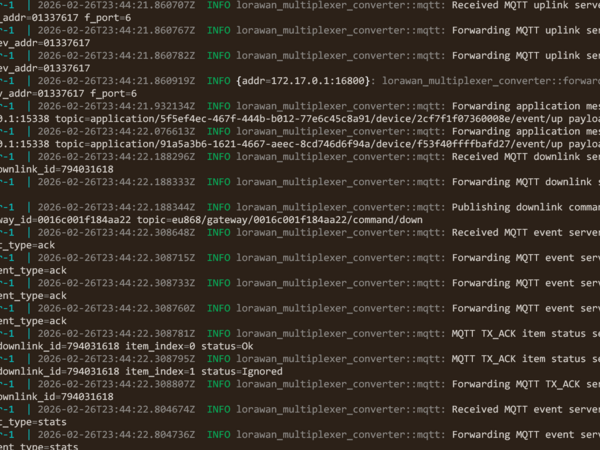
I design and deploy complete LoRaWAN infrastructure: gateway placement based on RF propagation analysis, ChirpStack network server configuration, device provisioning, the data pipeline into time-series storage, and dashboards for visualization and alerting. Every deployment includes full source code, documentation, and technical training for the people who will run it.
No recurring platform fees. No vendor lock-in. Your infrastructure, your data, your control.
Working on a LoRaWAN project?
If this article touches on something you're building, tell me about it. The first conversation is free, and you'll get an honest read on the right approach for your situation.
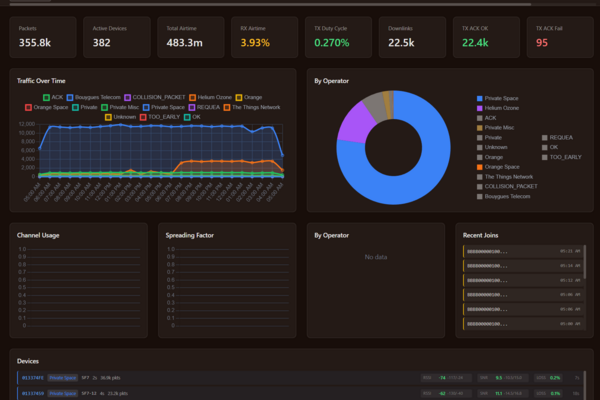
Book a Free ConsultationCurious what the finished thing looks like? Open the live demo dashboard