LoRaWAN vs NB-IoT vs Sigfox: Choosing the Right LPWAN Technology
The LPWAN Landscape
Low Power Wide Area Networks solve a specific problem: connecting thousands of sensors that send small amounts of data over long distances while running on batteries for years. WiFi drains batteries in hours. Cellular costs too much per device. Bluetooth doesn't reach far enough. LPWAN fills the gap.
Three technologies dominate this space: LoRaWAN, NB-IoT, and Sigfox. Each makes fundamentally different architectural decisions, and those decisions, rather than the radio performance, are what you actually end up living with.
LoRaWAN: Private Networks on Unlicensed Spectrum
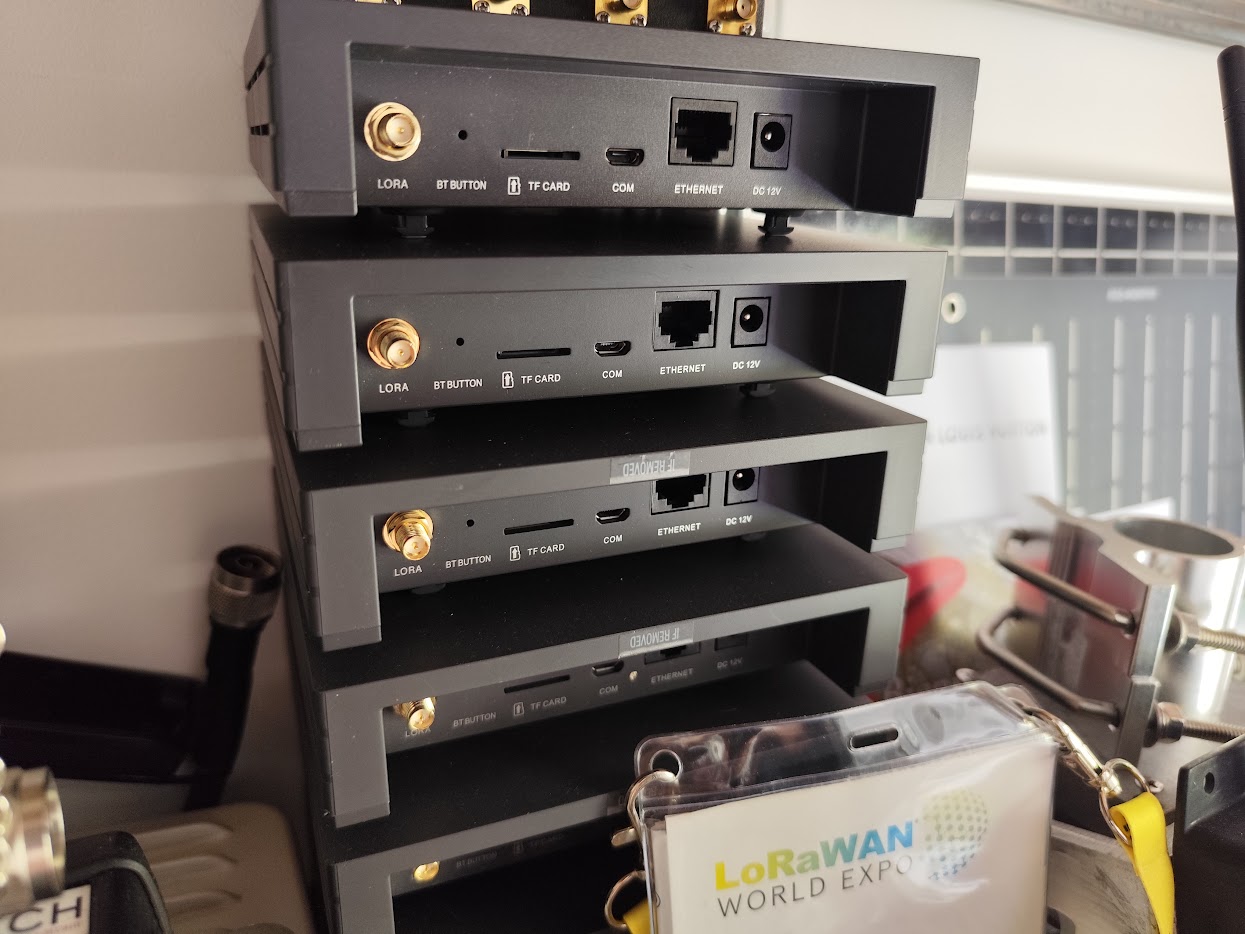
LoRaWAN operates on unlicensed sub-GHz ISM bands, 868 MHz in Europe and 915 MHz in North America, with regional plans elsewhere. That is the defining characteristic, and everything else follows from it.
On range it achieves 3 to 15 km in rural environments and 1 to 5 km in dense urban areas, and the sub-GHz frequency gives it building penetration that higher-frequency protocols cannot match, reaching basements, parking garages and plant rooms. Indoors a single gateway covers 3,000 to 5,000 square meters through concrete, steel and multiple floors. Devices in Class A, which is the common case, reach 5 to 10 years on one battery by spending nearly all their time asleep and waking briefly to send payloads of 51 to 241 bytes, which is ample for temperature readings, meter pulses, GPS coordinates and status.
The part that matters commercially is that you can deploy the whole thing yourself. Buy gateways, install a network server like ChirpStack, and the infrastructure is yours: no monthly SIM fees, no carrier contract, no dependency on a third party's business decisions, and data that stays on your own servers.
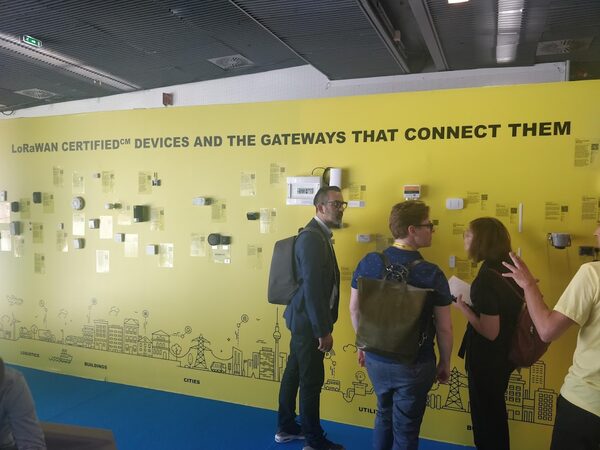
Around that sits an ecosystem large enough to make vendor lock-in a choice rather than a fate. The LoRa Alliance has over 500 members and more than 200 certified device manufacturers, and the open standard means you are never tied to one supplier for hardware, software or network infrastructure. Security is in the protocol rather than bolted on: two layers of AES-128, with the network session key establishing device authenticity and the application session key encrypting payloads end to end, so even a network operator cannot read your data. Capacity per gateway runs to thousands of devices depending on transmission intervals and spreading factors, with the adaptive data rate algorithm tuning each device automatically for the best balance of range and airtime.
NB-IoT: Cellular Infrastructure, Carrier Dependency
NB-IoT operates on licensed cellular spectrum, deployed by mobile network operators as an overlay on existing LTE infrastructure.
Indoor penetration is similar to LoRaWAN, thanks to sub-GHz operation in some bands, but coverage depends entirely on your carrier's NB-IoT rollout, and that varies dramatically by region. Rural coverage is often nonexistent, because carriers build where the business case is strongest. Battery life is comparable on paper at 5 to 10 years, but real-world results vary: the cellular protocol stack is more complex and devices must maintain carrier registration, which costs more energy than LoRaWAN's simpler wake, transmit, sleep cycle.
Ownership is the sharp difference, and there is no nuance in it. You do not own the network. You pay a per-device SIM fee to a carrier, and if that carrier raises prices, changes terms or discontinues NB-IoT in your region, your deployment is at their mercy. Several carriers have already deprioritized NB-IoT in favor of other technologies. The ecosystem is growing but remains smaller than LoRaWAN's, device options are more limited, module costs run higher than LoRa equivalents, and every unit needs a SIM and carrier provisioning before it can say anything.
It is still the right answer in three situations. Devices that move between cities or countries suit it, though roaming adds cost and complexity. Deployments where carrier-grade service guarantees are required by regulation need it. And any site where installing gateway infrastructure is genuinely impossible leaves you no alternative.
Sigfox: Simple but Limited
Sigfox operates its own global network on unlicensed ISM bands and sells connectivity as a service.
Range is excellent where coverage exists, up to 50 km with rural line of sight, and battery life is outstanding, because the ultra-simple protocol has no handshake and no acknowledgment by default. But coverage is binary. Either Sigfox has deployed infrastructure in your area or it has not, and you cannot extend it yourself.
The limits are what usually decide the matter. A device may send 140 uplink messages per day with 12-byte payloads, and receive 4 downlink messages of 8 bytes. That rules out anything needing frequent transmission, firmware updates or real-time control, and it means you cannot meaningfully send commands to a device at all. Nor can you deploy your own Sigfox network, so the deployment rests entirely on one company's infrastructure and continued solvency, and Sigfox has been through financial difficulty, a change of ownership and revised pricing, each of which lands directly on everyone built on top of it.
Head-to-Head Comparison
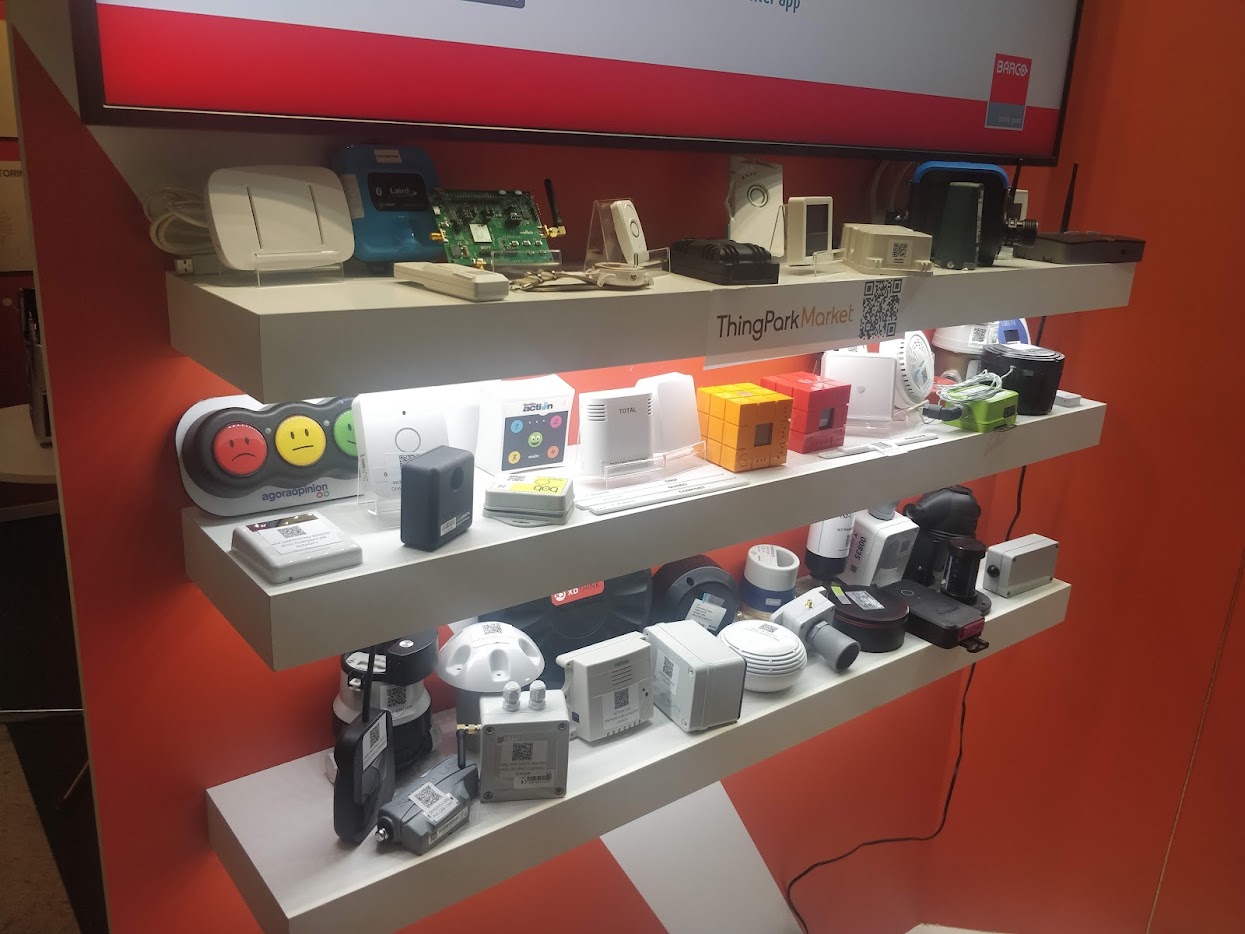
| Feature | LoRaWAN | NB-IoT | Sigfox |
|---|---|---|---|
| Spectrum | Unlicensed (free) | Licensed (carrier) | Unlicensed (Sigfox-operated) |
| Range (rural) | 5-15 km | 10-15 km | 10-50 km |
| Range (urban) | 1-5 km | 1-5 km | 3-10 km |
| Battery Life | 5-10 years | 5-10 years | 5-15 years |
| Data Rate | 0.3-50 kbps | 26-127 kbps | 100 bps |
| Payload Size | Up to 241 bytes | Up to 1600 bytes | 12 bytes |
| Messages/Day | Unlimited* | Unlimited | 140 up / 4 down |
| Bidirectional | Full (Class A/B/C) | Full | Very limited |
| Private Network | Yes | No | No |
| SIM Required | No | Yes | No |
| Per-Device Fee | None (private) | Monthly SIM fee | Annual subscription |
| Firmware Updates | Over-the-air (FUOTA) | Possible | Not practical |
| Encryption | AES-128 (2 layers) | LTE encryption | Basic |
| Certified Devices | 200+ manufacturers | Growing | Limited |
*Subject to regional duty cycle regulations (e.g., 1% duty cycle in EU868)
Which One, and When
LoRaWAN is the answer when you need to own and control the infrastructure, when data sovereignty matters as it does in healthcare, industry and government, and when you are deploying across a defined area where gateways can be installed. It is also the answer whenever you need genuine bidirectional communication, whether that is commands to devices or over-the-air firmware updates, when long-term cost predictability matters more than the initial hardware bill, when vendor independence and a deep device catalogue are worth something, and when indoor penetration into basements, plant rooms and parking garages is a hard requirement rather than a nice-to-have.
NB-IoT is the answer when devices are mobile across wide geographic areas, when carrier-grade service level agreements are legally required, when you cannot install any gateway infrastructure at all, when you need higher throughput per message than LoRaWAN offers, or simply when the carrier has strong NB-IoT coverage exactly where you are deploying.
Sigfox is the answer for very simple, very infrequent readings of a few messages per day, in an area Sigfox already covers, where nothing ever needs to be sent back to the device and ultra-low per-device cost is the deciding factor.
The Total Cost Reality
Hardware is only part of the equation, and over a five-year deployment the shape of the spending matters more than its size.
A LoRaWAN deployment is front-loaded and predictable: roughly 300 to 600 EUR per gateway plus 20 to 100 EUR per device, with the network server running on a basic Linux machine and no recurring per-device fee at all if you self-host.
NB-IoT inverts that. Hardware per device is cheaper up front, but every device carries a monthly SIM fee of roughly 0.50 to 5 EUR depending on carrier and volume. Run the arithmetic on a thousand devices at 2 EUR a month over five years and it comes to 120,000 EUR in connectivity fees before counting a single device, and that line never stops.
Sigfox devices are cheap with an annual subscription of 1 to 7 EUR each, but the 140-message daily limit and 12-byte payload restrict what can be built on top, and many projects outgrow those limits inside the first year, at which point the migration cost arrives all at once.
Why Most Enterprise Deployments Choose LoRaWAN
The combination of network ownership, zero recurring fees, AES-128 encryption, a large device ecosystem and full bidirectional communication makes LoRaWAN the default for organizations that take IoT seriously. You're not renting someone else's infrastructure. You're building your own.
The unlicensed spectrum means no carrier negotiations, no roaming complications and no surprise price increases. The open standard means you can change gateway vendors, device vendors and network server software without rebuilding the deployment.
For organizations deploying hundreds or thousands of sensors across defined areas such as buildings, campuses, farms, factories and cities, LoRaWAN delivers the lowest total cost of ownership with the highest degree of control.
What I Provide
I help organizations evaluate LPWAN options against their actual requirements, then design and deploy the one that fits, and sometimes that conversation ends with cellular being the better answer. Where it is LoRaWAN, the work covers gateway placement, network server configuration, device provisioning, the data pipeline and the dashboards on top, delivered with full source code and documentation. No vendor lock-in, no recurring platform fees.
Working on a LoRaWAN project?
If this article touches on something you're building, tell me about it. The first conversation is free, and you'll get an honest read on the right approach for your situation.
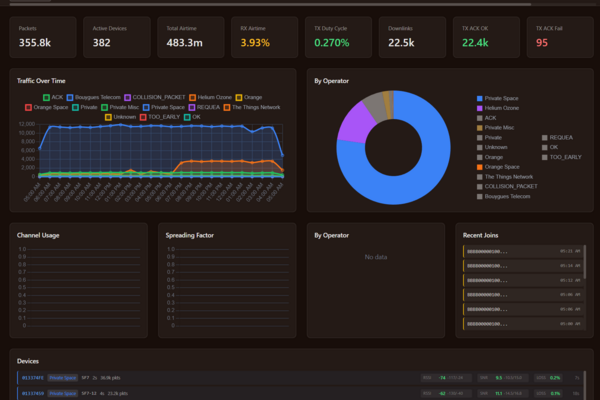
Book a Free ConsultationCurious what the finished thing looks like? Open the live demo dashboard