LoRaWAN Parking Management: Smart Parking for Cities and Campuses
Why Smart Parking Matters
Drivers circling blocks searching for parking waste fuel, create congestion, and frustrate customers or visitors. Municipal parking enforcement officers walk lots manually checking expired meters, missing violations while they're elsewhere. Hospital visitors arrive stressed, unable to find parking during emergencies. University students waste time hunting spaces between classes. Shopping centers lose business when full parking lots deter potential customers who assume no spaces exist.
Traditional parking management relies on static signage showing total capacity, becoming inaccurate the moment one vehicle enters or exits. Parking apps depending on users to report departures fail when drivers forget to check out. Camera-based systems work but require expensive infrastructure—power, networking, server processing for image analysis—making them impractical for sprawling surface lots.
LoRaWAN parking sensors provide real-time per-space occupancy data with minimal infrastructure. Battery-powered ground sensors detect vehicle presence, transmitting status updates to gateways covering entire parking facilities. Drivers see accurate availability through mobile apps or dynamic signage. Enforcement officers receive alerts when meters expire. Facility managers understand usage patterns optimizing pricing and capacity planning.
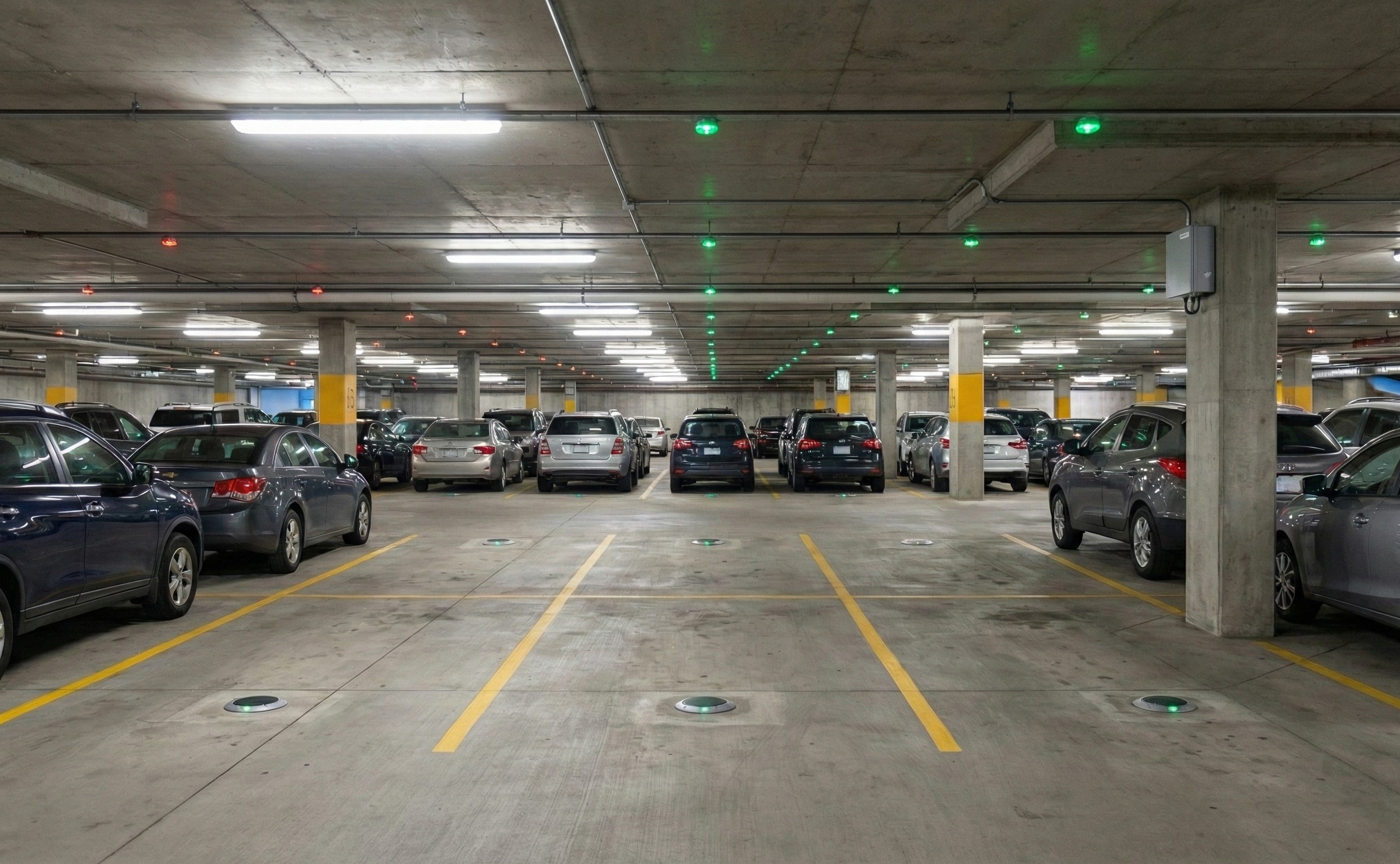
Ground Sensor Technologies
Magnetic sensors:
Buried or surface-mounted magnetic sensors detect vehicles by measuring disturbances in Earth's magnetic field. Large metal vehicle bodies create significant magnetic anomalies detectable by sensitive magnetometers. These sensors mount flush with pavement surface or install in shallow holes, making them suitable for existing parking lots. Battery life extends several years because magnetic sensing consumes minimal power—sensors wake periodically, measure magnetic field, detect changes, and transmit updates only when occupancy status changes.
Ultrasonic sensors:
Overhead ultrasonic sensors measure distance to ground, detecting vehicles by proximity. Mount sensors on poles, light fixtures, or building overhangs above parking spaces. Ultrasonic ranging works regardless of vehicle material—fiberglass, aluminum, steel all reflect ultrasound. Installation avoids pavement cutting but requires mounting infrastructure above each space. Battery-powered units need more frequent replacement than magnetic sensors because active ultrasonic ranging consumes more power than passive magnetic sensing.
Radar sensors:
Millimeter-wave radar sensors detect vehicles through Doppler effect and range measurement. Like ultrasonic sensors, radar mounts overhead but offers superior weather resistance—rain, snow, and temperature extremes minimally affect radar performance. Higher cost compared to magnetic or ultrasonic sensors makes radar less common for large deployments, but harsh-environment installations benefit from radar reliability.
Technology tradeoffs:
Magnetic sensors dominate parking applications because of long battery life, low cost, and pavement-flush mounting reducing vandalism risk. Ultrasonic sensors suit covered parking garages where overhead mounting is straightforward and battery replacement is easier. Radar justifies its cost premium in extreme climates where other technologies struggle. Most large-scale deployments use magnetic sensors for surface lots and magnetic or ultrasonic for garages.
Battery Life Realities
Manufacturer claims versus field performance:
Marketing materials claim 5-10 years battery life for parking sensors. Real-world deployments see 3-5 years in temperate climates, less in temperature extremes. Battery life depends heavily on transmission frequency and environmental conditions. Sensors transmitting every occupancy change drain batteries faster than sensors batching updates. Freezing temperatures reduce lithium battery capacity significantly.
Update frequency impact:
High-value parking—airport short-term lots, hospital visitor parking, downtown commercial spaces—justifies frequent updates providing real-time accuracy. Lower-value applications—employee parking, long-term storage—accept less frequent updates extending battery life. Configure update intervals based on application requirements rather than using default settings. Aggressive update schedules improve user experience but increase maintenance costs.
Replacement logistics:
Plan battery replacement as recurring operational cost. Magnetic sensors require pavement access for battery changes. Coordinate replacements with parking lot maintenance windows minimizing disruption. Overhead sensors simplify replacement but require lift equipment for high installations. Some deployments prefer shorter-life batteries with lower upfront costs over long-life batteries requiring larger initial investment.
Solar augmentation:
Overhead sensors can integrate solar panels extending battery life or eliminating batteries entirely. Surface lot installations with adequate sun exposure benefit from solar power. Covered garages lack solar viability—battery-only power remains necessary. Calculate solar panel sizing based on local insolation data, sensor power consumption, and battery capacity requirements.
Gateway Deployment for Parking Facilities
Surface lot coverage:
Open parking lots provide excellent LoRaWAN propagation. Single gateway often covers hundreds of spaces across several acres. Mount gateways on existing light poles, buildings, or dedicated poles with clear line-of-sight to parking areas. Surface lots rarely face RF obstacles—vehicles temporarily block signals but mobility prevents persistent dead zones.
Multi-level parking structure challenges:
Concrete and steel parking garages create difficult RF environments. Floors block vertical propagation requiring gateways on each level or strategic placement in stairwells and ramps where signals propagate between floors. Dense sensor deployments generate significant network traffic—ensure gateway capacity handles message rates from hundreds of sensors updating frequently.
Multi-site municipal deployments:
Cities managing dozens of parking facilities need gateways at each location. Coordinate frequency planning avoiding interference between nearby sites. Centralized network server aggregates data from distributed gateways providing citywide parking visibility. Plan backhaul connectivity—cellular, fiber, or point-to-point wireless—connecting gateways to central infrastructure.
Interference and coexistence:
High sensor density creates potential for network congestion. Adaptive data rate (ADR) helps but dense deployments benefit from careful frequency planning. Spread sensors across available sub-bands and spreading factors. Monitor packet loss rates and adjust network parameters if congestion appears.
Real-Time Occupancy and Wayfinding
Mobile applications:
Drivers use smartphone apps showing real-time parking availability. Map interfaces display open spaces by location, allowing navigation to areas with availability. Filter by parking type—visitor, disabled, electric vehicle charging, time-limited. Push notifications alert drivers when spaces open in preferred areas. Reservation systems enable advance booking for guaranteed spaces.
Dynamic signage:
Digital signs at parking facility entrances display available space counts. Multi-facility campuses show availability across locations directing drivers to less-congested areas. Freeway-mounted signs inform drivers before exits, reducing unnecessary detours. Update signage in real-time as occupancy changes maintaining accuracy.
Navigation integration:
Integrate parking data with navigation platforms—Google Maps, Apple Maps, Waze. Drivers searching destinations see parking availability as part of route planning. This integration requires APIs exposing parking data to third-party services. Cities providing open parking data improve overall transportation efficiency.
Accuracy and user trust:
Real-time systems only work when users trust displayed information. Sensor maintenance ensuring accurate detection maintains system credibility. Drivers encountering full lots marked as available quickly abandon the system. Sensor health monitoring and proactive maintenance matter more than absolute accuracy—consistent 95% accuracy beats erratic swings between perfect and useless.
Enforcement and Revenue Optimization
Automated violation detection:
Integrate parking sensors with payment systems. Detect vehicles occupying spaces beyond paid time automatically generating enforcement alerts. Officers receive violation lists with space locations, eliminating random patrols. Increase enforcement efficiency while reducing officer workload. Some systems generate violation notices automatically, though most jurisdictions require human verification before issuing citations.
Dynamic pricing:
Adjust parking rates based on real-time occupancy. Increase prices as lots fill, encouraging turnover and directing drivers to less-congested areas. Reduce rates during low-demand periods filling underutilized capacity. Dynamic pricing optimizes revenue while managing congestion. Require robust payment system integration and clear user communication about rate structures.
Occupancy analytics:
Historical occupancy data reveals usage patterns informing pricing strategy and capacity planning. Which lots fill first? When do peak periods occur? How long do vehicles typically stay? This analysis supports decisions about rate structures, time limits, and facility expansion. Data-driven parking management replaces guesswork with measured insights.
Payment integration:
Link parking sensors to payment platforms—mobile payment apps, meter systems, license plate recognition. Enable payment by space number using apps or SMS. Automatically extend time through mobile payments without returning to meters. Payment integration improves user experience while increasing revenue collection rates.
Multi-Site Campus and Municipal Deployments
University campus parking:
Universities manage thousands of parking spaces across multiple lots serving students, faculty, staff, and visitors. Different permit types have different lot access. Real-time occupancy data helps users find permitted parking quickly. Reduce complaints about parking availability by providing objective occupancy information. Optimize permit sales based on actual utilization data rather than assumptions about capacity.
Hospital parking:
Hospital parking creates unique challenges—emergency visitors need immediate access, staff park long-term, patient visitors have unpredictable arrival times. Priority parking for emergency department visitors requires real-time availability visibility. Integration with hospital systems could reserve spaces for ambulatory patients arriving for scheduled procedures. Reduce stress for visitors during already-difficult situations.
Municipal on-street parking:
Cities managing on-street parking face different challenges than off-street lots. Install sensors in street-side spaces monitoring occupancy and payment compliance. Dynamic signage directs drivers to available on-street parking reducing cruising. Enforcement efficiency increases dramatically when officers know exactly which spaces have expired meters. Some cities achieve ROI entirely through increased enforcement revenue.
Commercial property parking:
Shopping centers, office complexes, and mixed-use developments manage parking for multiple tenants and customers. Real-time occupancy prevents customer frustration when lots appear full but spaces exist. Validate parking for customers versus unauthorized users. Analyze tenant utilization patterns informing lease negotiations and parking allocation.
Installation and Maintenance Considerations
Pavement cutting for magnetic sensors:
Installing magnetic sensors requires core drilling or cutting pavement. Coordinate with parking lot maintenance schedules performing installations during repaving or restriping. Proper installation ensures sensor longevity—poor sealing allows water ingress causing failures. Some sensors mount surface-level avoiding pavement cutting but face higher vandalism risk.
Vandalism and durability:
Parking sensors endure vehicle traffic, snowplows, pressure washers, and occasional intentional damage. Specify industrial-grade sensors rated for vehicular traffic. Flush-mount magnetic sensors suffer less vandalism than protruding overhead sensors. Budget for sensor replacement—even durable sensors fail under continuous traffic and environmental exposure.
Network monitoring and maintenance:
Monitor sensor health remotely identifying failures before users report problems. Low battery alerts trigger maintenance scheduling. Sensors reporting implausible occupancy patterns (rapid changes suggesting malfunction) require investigation. Proactive maintenance maintains system accuracy and user trust.
Calibration and accuracy:
Initial sensor calibration ensures accurate detection. Magnetic sensors learn baseline magnetic field during installation. Overhead sensors calibrate distance measurements to ground. Some deployments require periodic recalibration—pavement changes, nearby metalwork installation, or environmental shifts affecting baseline measurements.
Integration with Parking Management Systems
Third-party parking platforms:
Many municipalities and campuses use commercial parking management platforms—ParkMobile, Passport, FlashParking. Integrate LoRaWAN sensor data with these platforms via APIs. Real-time occupancy data enhances platform functionality without requiring platform replacement. Avoid vendor lock-in by maintaining ownership of sensor infrastructure and data.
Access control systems:
Gated parking facilities integrate sensors with barrier gates and access control. Open gates automatically when reservations arrive. Provide gate codes only when spaces are available. Track entry/exit correlating with sensor occupancy data verifying system accuracy.
Business intelligence and reporting:
Export occupancy data to business intelligence platforms analyzing usage patterns. Generate reports for stakeholders showing utilization rates, peak demand periods, and revenue optimization opportunities. Historical data supports budgeting and planning decisions.
Open data initiatives:
Progressive cities publish parking occupancy data as open datasets. Developers build applications leveraging real-time parking information. Open data improves transportation efficiency citywide while demonstrating municipal commitment to transparency and innovation.
System Design and Deployment Planning
Pilot deployments:
Start with small pilot installations testing sensor performance and user adoption. Choose representative facilities covering diverse conditions—surface lots, garages, on-street parking. Validate sensor accuracy, battery life, and gateway coverage before large-scale rollout. Pilot results inform vendor selection and deployment strategy.
Phased rollout:
Large deployments benefit from phased implementation. Install high-value locations first demonstrating ROI and building stakeholder support. Expand coverage incrementally learning from early phases. Phased approach spreads capital costs across multiple budget cycles while maintaining project momentum.
Cost-benefit analysis:
Calculate total cost of ownership including sensors, gateways, network infrastructure, installation, and ongoing maintenance. Compare against benefits—enforcement revenue increase, operational efficiency, user satisfaction, congestion reduction. Municipal deployments may justify costs through quality-of-life improvements even without direct revenue increase.
Stakeholder engagement:
Successful parking management projects require buy-in from multiple stakeholders—parking operations, enforcement, IT departments, user groups. Engage stakeholders early addressing concerns and incorporating requirements. Demonstrate system value through pilot results and clear metrics.
What I Provide
Services:
- Parking management system design for municipal, campus, hospital, and commercial facilities
- Sensor technology selection based on parking environment and operational requirements
- Gateway placement planning and RF coverage analysis for single and multi-site deployments
- Network server configuration and data pipeline development
- Mobile app and dynamic signage integration
- API development for payment system and parking platform integration
- Occupancy analytics and reporting dashboard creation
- Training on system operation and maintenance procedures
You own everything:
- Complete source code for integrations and custom applications
- Self-hosted infrastructure (network server, database, dashboards)
- All configuration files and deployment documentation
- API implementations and data export tools
- No ongoing platform fees or vendor lock-in
Hardware (you source):
- LoRaWAN parking sensors (magnetic, ultrasonic, or radar)
- LoRaWAN gateways with appropriate facility coverage
- Server infrastructure (on-premise or cloud hosting)
- Dynamic signage and display systems if required
- Installation equipment and materials
I don't sell parking sensors or promote specific vendors. I analyze your parking management requirements, facility characteristics, and operational goals—then design monitoring systems providing reliable occupancy data and practical enforcement tools. The goal is improving parking operations through actionable data, not installing maximum sensor density regardless of value.
Ready to Get Started?
Get expert guidance on implementing LoRaWAN solutions for your organization.
Let's Talk