LoRaWAN Building Automation: Beyond Basic Metering
Why Buildings Need More Than Basic Metering
Most commercial buildings track electricity and water consumption with sub-meters—valuable data showing total usage. But knowing a floor consumed 5,000 kWh last month doesn't explain why or suggest improvements. You see the result, not the cause.
Building automation with LoRaWAN sensors reveals the operational patterns driving consumption. Discover HVAC systems conditioning empty spaces, air quality issues forcing ventilation overrides, or leaks wasting resources before bills arrive. Optimize based on actual occupancy and environmental conditions rather than fixed schedules assuming buildings operate identically every day.
LoRaWAN works where traditional building management systems prove too expensive or impractical. Retrofit existing structures without trenching for control wires. Add monitoring to spaces BMS infrastructure never reached. Expand coverage incrementally as budgets allow rather than committing to comprehensive system replacements.
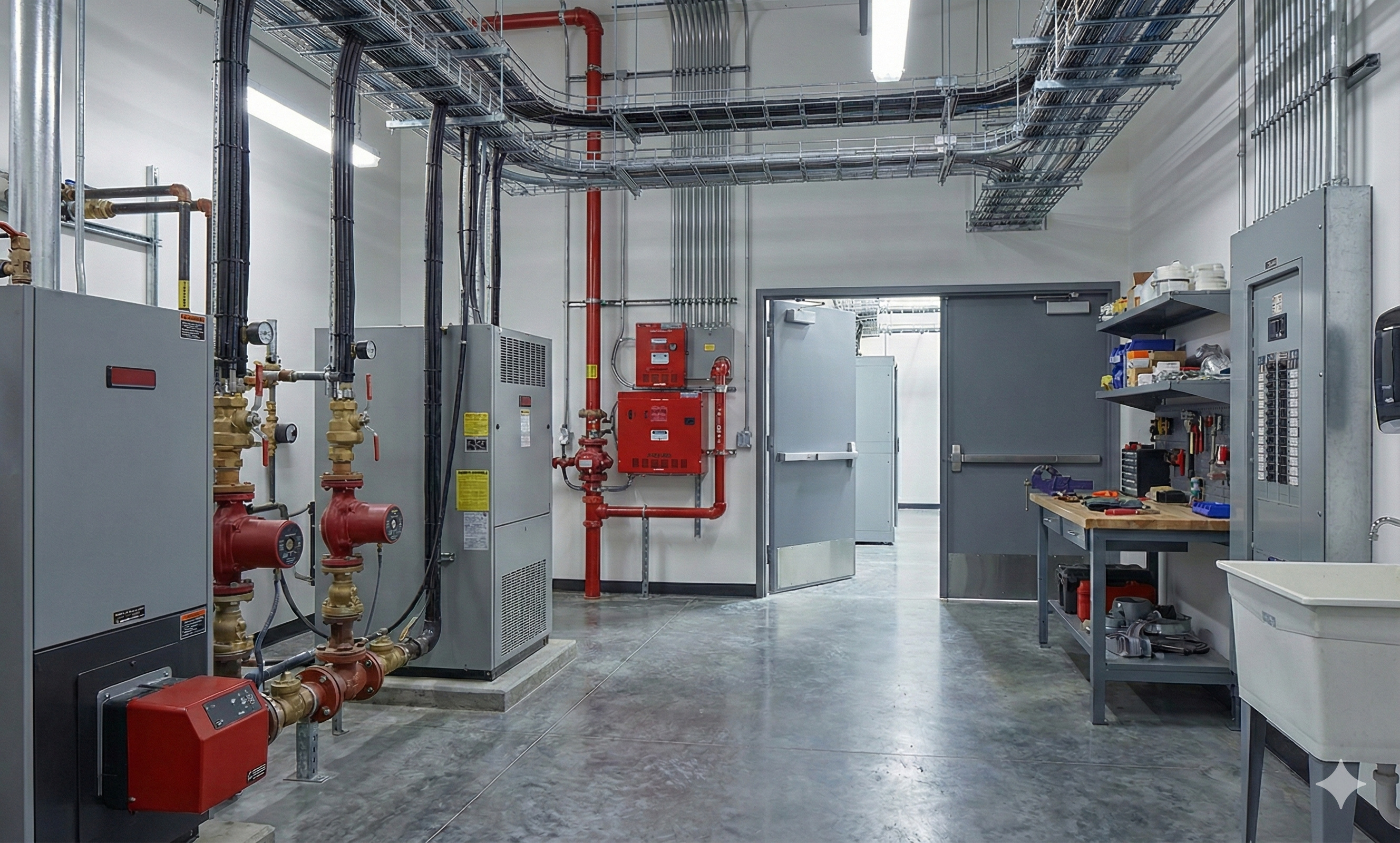
HVAC Optimization Through Occupancy Sensing
Fixed schedule problems:
Most buildings run HVAC on timers—conditioning from 6 AM to 6 PM regardless of actual occupancy. Monday morning meetings don't need the same cooling as Thursday afternoon conference room marathons. Weekends when teams work remotely waste energy maintaining comfort for empty floors.
Occupancy-based control:
LoRaWAN occupancy sensors detect actual space usage. PIR (passive infrared) sensors catch movement, confirming presence. CO2 sensors indicate room occupancy by tracking breathing—rising CO2 levels mean people are present, stable or falling levels suggest vacancy. Combining multiple sensor types reduces false readings from either technology alone.
Temperature setpoint adjustment:
Unoccupied spaces accept wider temperature ranges. Reduce cooling setpoints by several degrees when rooms sit empty. During heating seasons, lower temperatures in vacant areas. Maintain comfort in occupied zones while reducing energy waste conditioning unused spaces. Temperature sensors throughout buildings reveal actual conditions versus assumed uniform environments.
Ventilation control:
CO2-based ventilation adjusts fresh air intake to actual occupancy. Low CO2 indicates few occupants—reduce outdoor air intake saving heating or cooling energy conditioning that air. Rising CO2 triggers increased ventilation before occupants notice stuffiness. This demand-controlled ventilation reduces energy consumption significantly compared to constant ventilation rates designed for maximum occupancy that rarely occurs.
Zone-level granularity:
Large open-plan offices or multi-room facilities benefit from zone-based control. Different areas have different occupancy patterns—meeting rooms pulse with activity then sit empty, private offices maintain steady occupancy during business hours, common areas see constant traffic. Zone-specific HVAC control matches energy use to actual demand rather than treating entire floors identically.
Air Quality Monitoring and Ventilation
Why air quality matters:
Poor indoor air quality reduces productivity, increases sick days, and creates occupant complaints. High CO2 levels cause drowsiness and reduced cognitive function. Volatile organic compounds (VOCs) from materials, furnishings, or cleaning products irritate occupants. Particulate matter triggers respiratory issues. Humidity outside optimal ranges promotes mold growth or increases pathogen transmission.
Sensor types and measurements:
CO2 sensors track breathing-related air quality, with comfortable levels typically below 1000 ppm. VOC sensors detect organic chemical compounds, with readings indicating when ventilation needs increasing. Particulate matter sensors (PM2.5, PM10) measure airborne particles from outdoor pollution or indoor sources. Temperature and humidity sensors ensure environmental comfort and prevent moisture problems.
Automated ventilation response:
Integrating air quality sensors with ventilation controls maintains healthy environments automatically. Rising CO2 triggers increased outdoor air intake. VOC spikes from cleaning activities boost exhaust rates. Particulate alerts close outdoor air dampers during pollution events, relying on filtration instead. This automated response prevents air quality degradation before occupants notice discomfort.
Multi-zone monitoring:
Different spaces have different air quality profiles. Kitchens generate VOCs and particulates requiring dedicated exhaust. Conference rooms experience CO2 spikes during meetings. Manufacturing areas may have process-specific air quality concerns. Monitoring each zone independently enables targeted ventilation strategies rather than over-ventilating entire buildings based on worst-case assumptions.
Leak Detection and Prevention
Early detection value:
Small leaks caught early prevent major damage. Water seeping through ceiling tiles means failed roofing or plumbing dripping for days before visible damage appears. Refrigerant leaks from HVAC systems reduce efficiency and eventually cause compressor failures. Compressed air leaks waste energy running compressors to maintain pressure.
Water leak sensors:
Place sensors at vulnerable locations—under sinks, near water heaters, below HVAC condensate drains, along risers, in server rooms, or anywhere water damage proves expensive. Sensors detect moisture presence, immediately alerting facility managers. Response within minutes prevents water spreading to adjacent spaces or soaking into structural materials.
Refrigerant monitoring:
Refrigerant sensors detect HVAC system leaks before performance degrades noticeably. Gradual refrigerant loss reduces cooling capacity and increases energy consumption as systems run longer attempting to meet setpoints. Early leak detection enables repairs before compressor damage or complete system failure occurs.
Compressed air systems:
Manufacturing facilities running compressed air lose significant energy through leaks. Ultrasonic leak detectors identify audible hissing, but permanent monitoring tracks system pressure, flow rates, and compressor runtime. Pressure drops or increased compressor cycling indicate new leaks requiring investigation. Calculate energy waste by comparing current consumption against baseline efficient operation.
Occupancy-Based Lighting Control
Lighting energy waste:
Lights illuminating empty spaces waste energy. Perimeter zones receive adequate daylight certain hours but remain artificially lit. Corridors, stairwells, and storage areas rarely need full brightness continuously. Conference rooms and private offices sit dark most of each day yet maintain constant lighting during business hours.
Motion-based control:
PIR sensors detect occupant movement, switching lights on when people enter spaces. Vacancy sensors turn lights off after spaces remain unoccupied for configured periods—typically 10-30 minutes depending on space type and expected usage patterns. This simple automation eliminates lights burning in vacant rooms.
Daylight harvesting:
Light sensors measure natural illumination, reducing or eliminating artificial lighting when daylight provides adequate brightness. Perimeter zones benefit most—windows provide substantial daylight certain hours, making electric lighting redundant. Gradually dimming electric lights as daylight increases maintains consistent illumination while reducing energy consumption.
Task tuning:
Different tasks require different lighting levels. Storage areas, corridors, and mechanical spaces function adequately with reduced lighting. Task-specific lighting provides bright illumination only where needed—desk surfaces, work benches, or reading areas—while maintaining lower ambient lighting elsewhere.
Integration with Building Management Systems
Existing BMS infrastructure:
Many commercial buildings operate building management systems controlling HVAC, lighting, and other equipment. These systems use proprietary protocols—BACnet, Modbus, or vendor-specific networks. Integrating LoRaWAN sensors with existing BMS infrastructure extends monitoring coverage and enables data-driven optimization without replacing functional control systems.
Protocol translation:
LoRaWAN network servers collect sensor data then forward it to BMS platforms via standard protocols. MQTT enables lightweight pub/sub messaging. REST APIs provide request/response integration. OPC UA works for industrial environments. This protocol translation enables BMS systems to consume LoRaWAN sensor data as if reading native sensors.
Hybrid deployments:
Combine wired BMS-controlled equipment with wireless LoRaWAN sensors monitoring spaces BMS infrastructure never reached. Use LoRaWAN occupancy sensors throughout buildings while BMS manages HVAC equipment. LoRaWAN provides monitoring and insight; BMS executes control decisions. This hybrid approach avoids complete system replacement while gaining benefits of comprehensive monitoring.
Data aggregation and analysis:
Centralized platforms combine data from multiple sources—LoRaWAN sensors, BMS equipment, utility meters, weather stations. Correlate occupancy patterns with HVAC runtime. Compare energy consumption before and after implementing demand-controlled ventilation. Identify opportunities by analyzing actual operational data rather than relying on design assumptions.
Multi-Tenant Commercial Buildings
Individual tenant monitoring:
Multi-tenant buildings often provide HVAC, lighting, and utilities as part of lease agreements. Understanding per-tenant consumption enables fair cost allocation or identifies excessive usage requiring discussion. Tenants demanding extended HVAC hours or maintaining unusual environmental conditions should bear associated costs rather than spreading expenses across all occupants.
Common area optimization:
Lobbies, corridors, parking garages, and amenity spaces consume energy regardless of tenant presence. Occupancy-based control reduces waste in these shared areas. Dim corridor lighting during low-traffic periods. Reduce garage ventilation when vehicle counts are minimal. Adjust lobby HVAC based on actual foot traffic rather than maintaining constant comfort for sporadic visitors.
Tenant satisfaction and comfort:
Individual zone monitoring identifies comfort complaints' root causes. Temperature sensors reveal actual conditions versus tenant perception. Comparing similar spaces shows whether complaints stem from equipment issues or tenant expectations. Data-driven conversations replace subjective disagreements about HVAC performance.
Retrofit-friendly deployment:
Adding monitoring to existing multi-tenant buildings faces challenges—minimizing tenant disruption, avoiding expensive infrastructure changes, phased implementation matching budget availability. LoRaWAN sensors install without trenching through tenant spaces or requiring power wiring to remote locations. Battery-powered sensors eliminate electrical work. Incremental deployment adds coverage gradually without comprehensive building shutdown.
Energy Savings and ROI
Quantifiable improvements:
Building automation's value comes from measurable energy reduction. HVAC optimization through occupancy-based control typically reduces heating and cooling energy consumption. Demand-controlled ventilation cuts fan energy and reduces conditioning loads for outdoor air. Occupancy-based lighting eliminates waste in vacant spaces. Leak detection prevents efficiency degradation and avoids water damage costs.
Baseline establishment:
Calculate savings by comparing consumption before and after implementing automation. Establish baseline energy use from utility bills or interval metering. Track consumption patterns across seasons, accounting for weather impacts. Post-implementation monitoring reveals actual savings versus projected estimates.
Payback calculation:
Compare system costs—sensors, gateways, installation, software, integration—against annual energy savings. Many commercial buildings achieve payback within a few years through reduced utility costs alone. Additional benefits include avoided water damage, improved indoor air quality reducing sick days, and enhanced tenant satisfaction improving lease renewals.
Ongoing optimization:
Initial deployment provides immediate benefits. Continuous monitoring enables progressive optimization as operational patterns become clear. Adjust setpoints, refine control algorithms, expand monitoring to additional spaces showing potential. Energy management proves iterative—each analysis reveals new opportunities.
What I Provide
Services:
- Building automation system design and sensor placement planning
- Energy audit and baseline establishment for ROI tracking
- Integration with existing BMS platforms and control systems
- Network server configuration and data pipeline development
- Custom dashboard creation for facility managers and building operators
- HVAC optimization strategy based on actual occupancy and usage patterns
- Alert configuration for leak detection and equipment issues
- Training on system operation and ongoing optimization
You own everything:
- Complete source code for integrations and automation logic
- Self-hosted infrastructure (network server, database, dashboards)
- All configuration files and sensor deployment documentation
- Control algorithms and optimization strategies
- No ongoing platform fees or vendor lock-in
Hardware (you source):
- LoRaWAN sensors (occupancy, CO2, temperature, humidity, leak detection)
- LoRaWAN gateways with appropriate building coverage
- Server infrastructure (on-premise or cloud hosting)
- Integration hardware for BMS connectivity if required
I don't sell building automation hardware or push specific vendors. I analyze your building characteristics, energy consumption patterns, and operational requirements—then design monitoring and control strategies that deliver measurable improvements. The goal is practical energy savings and improved comfort, not installing maximum sensor density regardless of value.
Ready to Get Started?
Get expert guidance on implementing LoRaWAN solutions for your organization.
Let's Talk